Debating coaching in Perth: a guide for parents
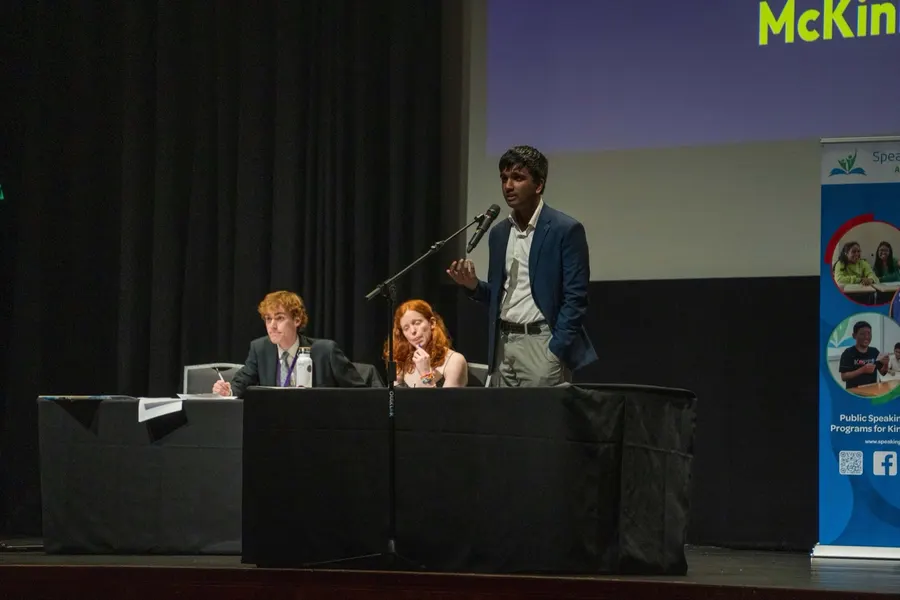
Jehiel Pather, NSW State Team
· 7 min read
The short answer
Most Perth students debate in the Western Australian Debating League (WADL) Schools Debating Competition, which runs in Novice, Junior and Senior divisions and finishes with a knockout finals series and a grand final in late August. WADL also runs a British Parliamentary competition and selects the WA team for the National Schools Debating Championships: its state squad trials are open to Years 7 to 12, and WA hosts the championship in 2027. DebateBetter teaches online in groups of six or fewer. Perth has no daylight saving, so our Sydney-time classes start three hours earlier in Perth from October to early April and two hours earlier the rest of the year.
Families in Western Australia who contact us usually ask the same two questions: how online classes fit with school debating in WA, and what time they would actually be in Perth. This guide answers both, and covers how the WA state team is chosen and what to look for in a coach. The competition details come from the Western Australian Debating League's own website. They change from year to year, so check with WADL or your school's debating coordinator before planning around anything here.
How school debating works in WA
WADL was established in 1920 and is run by volunteers. Its flagship is the Schools Debating Competition (SDC), a three-on-three competition for high school students. Schools enter teams in three divisions: Novice, Junior and Senior. WADL's SDC handbook, which is still the one linked from its site although it was last updated in 2021, sets them out like this:
| Division | Years | Speech length |
|---|---|---|
| Novice | 7 and 8 | 4 minutes |
| Junior | 9 and 10 | 5 minutes |
| Senior | 11 and 12 | 7 minutes |
According to the handbook, Novices debate prepared topics all season. Junior and Senior teams debate two prepared rounds and then move into impromptu rounds, where the team has an hour to prepare without access to the internet. Impromptu rounds also bring in points of information, short interjections offered to the speaker on the other side during their speech.
The season ends with the SDC finals series, five knockout rounds that finish with a grand final in late August between the last two Novice, Junior and Senior teams. WADL lists the finals at Shenton College and Perth Modern, with the grand final at the State Library of WA.
Other WADL competitions
- The British Parliamentary Competition, which WADL describes as Australia's only high school BP-style competition. Students compete in pairs from the same school, in a Cygnets division for Years 7 to 9 and a Swans division for Years 10 to 12. Preliminary rounds are held at Perth metropolitan high schools.
- The AHISA Competition, a for-fun competition for independent schools. Every debate runs at one venue on one day, and every round is impromptu, with each round built around a theme such as science and technology or philosophy and ethics.
- A Regional Debating Competition, which WADL lists on its site with details still to come.
How the WA state team is chosen
WADL selects the WA State Debating Team for the National Schools Debating Championships, the tournament between the states and territories that we cover in our guide to the national schools championship. WADL says the 2027 championship will be held in WA in early May 2027.
The trials for the 2027 team are listed for Saturday 7 and Sunday 8 November, from 8am to 4pm, with the venue to be announced. They are open to students in Years 7 to 12, and registration is free. That younger age range stands out: in NSW, for comparison, trials are for Years 10 to 12, with keen Year 9s encouraged.
Students trial as individuals rather than as a school team. There are six rounds over the weekend, three each day, all three-on-three impromptu debates with 8-minute speeches. Students can take part in all six but must compete in at least three to be considered. The organisers put students into teams, and the teams, sides and speaking positions change from round to round, so a student may debate alongside people from other schools with very different experience.
Speakers are marked on matter, manner and method (our guide to how debates are marked explains those). WADL says selectors also look more broadly, at three things in particular:
- How a student applies feedback. Feedback is recorded and shared across the selection panel, so selectors can see whether a student improves from round to round.
- Teamwork in preparation. Adjudicators may watch teams prepare, and WADL says that keeping strong ideas to yourself to boost your own speech is not a good strategy.
- Adaptability across different teammates, roles and topics.
Fourteen students from the trials are invited into the State Debating Squad, which trains from Term 4 through to Term 1 the following year with workshops and debates. Four students are then chosen from the squad to form the team.
For a student thinking about trials, the practical preparation is hour-long impromptu prep to a clock, eight-minute speeches, and practice speaking in more than one position. Our guide to NSW state team selection goes into preparation in more detail, and most of it applies in WA too.
What to look for in a coach
Ask which teams a coach has debated for and what they won, since debating results are published and you can check them. Ask how many students are in a class and how many speeches each gives per session: students improve by speaking and being corrected, and in a large class some barely get a turn. Ask what feedback looks like. It should point to a moment in the speech and give the student one specific thing to change.
For a WA student, it's also worth asking whether classes practise impromptu preparation, since Junior and Senior teams spend most of the SDC season on it, and whether the coach can teach British Parliamentary if your child is interested in that competition. Our comparison of online and in-person coaching may help if you're deciding between the two.
Online classes on Perth time
Our class times are set in Sydney time, and the gap with Perth changes during the year because WA doesn't use daylight saving. From the first Sunday in October to the first Sunday in April, while New South Wales is on daylight saving, Perth is three hours behind Sydney. For the rest of the year it is two hours behind.
| Sydney time | Perth, October to early April | Perth, April to October |
|---|---|---|
| 7 to 9pm | 4 to 6pm | 5 to 7pm |
| 10am to 12pm | 7 to 9am | 8 to 10am |
Term 4 group classes run on Mondays, Wednesdays and Fridays from 7 to 9pm, and on Sundays from 10am to 12pm or 7 to 9pm, Sydney time. At the moment that puts our evening classes straight after school in Perth, which suits some families, while a 10am Sunday class in Sydney starts at 7am in Perth. We always confirm your child's class in your local time, and private coaching can be booked at whatever time suits your family.
Where DebateBetter fits
DebateBetter is an online academy with no venue in Perth or anywhere else. Classes have six or fewer students, grouped by year level and experience, so everyone gives a speech and gets feedback every session. Our coaches include former NSW state team captains, an Auckland representative debater, and Jack Glass, joint best speaker at the 2026 Australian British Parliamentary Debating Championship. Their records are on the coaches page and the results page.
Group classes are $50 per student per hour, and each class is two hours, so $100 a class, paid class by class or for the rest of the term at $90 a class. Private coaching is $150 per hour. Class times and enrolment are on the programs page, or get in touch if you'd like to talk it through first.
Common questions
- What debating competitions are there for Perth school students?
- The main one is the WA Debating League's Schools Debating Competition, with Novice, Junior and Senior divisions. WADL also runs a British Parliamentary competition for Years 7 to 12 and an impromptu AHISA competition for independent schools.
- Who can trial for the WA state debating team?
- WADL's state squad trials are open to students in Years 7 to 12, and registration is free. The trials for the 2027 team are listed for Saturday 7 and Sunday 8 November, with the venue to be announced.
- How is the WA state debating team selected?
- Students debate in randomised teams across up to six impromptu rounds of 8-minute speeches and must compete in at least three. Fourteen are invited into the state squad, which trains from Term 4 to Term 1, and four are chosen from the squad for the National Schools Debating Championships.
- What time are DebateBetter's classes in Perth?
- Our class times are set in Sydney time. WA doesn't use daylight saving, so Perth is three hours behind Sydney from October to early April and two hours behind for the rest of the year. A 7pm Sydney class starts at 4pm in Perth in summer and 5pm in winter.
- Do you have a venue in Perth?
- No. DebateBetter has no venue in any city. Every class runs online over Zoom, so Perth students join from home.
- How much does debating coaching cost?
- At DebateBetter, group classes are $50 per student per hour in groups of six or fewer. Each class runs for two hours, so $100 for each two-hour class, paid class by class or for the rest of the term at $90 a class. Private coaching is $150 per hour.