Debating coaching in Sydney: a guide for parents
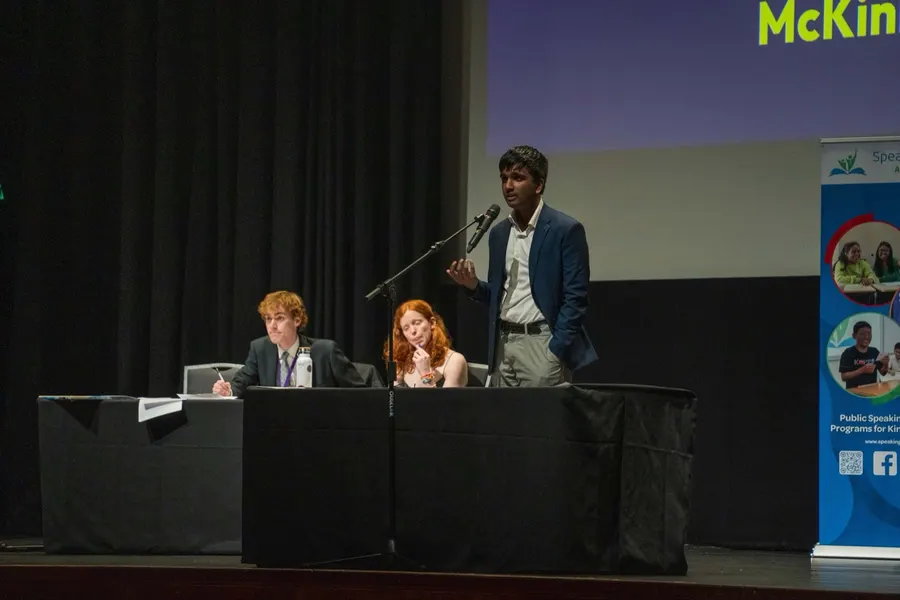
Jehiel Pather, NSW State Team
· 8 min read
The short answer
Good debating coaching in Sydney comes down to four things: coaches with results you can check, classes small enough that every student speaks every session, specific feedback after each speech, and practice between classes. Sydney students debate in school and interschool competitions such as the Premier's Debating Challenge and the ISDA and CSDA competitions, and the strongest trial for the NSW state team. DebateBetter coaches Years 7 to 12 online in groups of six or fewer, with coaches who include former NSW state team captains.
We run an online debating academy, and most of our coaches learned to debate in NSW schools and went on to represent NSW. This guide is what we'd tell a friend who asked how to choose a coach, including the questions to ask us.
Where Sydney students debate
It helps to know what your child is being coached for. Most Sydney students debate in one or more of these:
- The Premier's Debating Challenge, run by the NSW Department of Education's Arts Unit for government schools, with competitions for different year groups.
- Independent and Catholic schools' competitions, including ISDA and CSDA, plus competitions within school associations such as GPS.
- Regional and state representative debating. Arts Unit regions pick squads for the Junior State Debating Championships (Years 9 and 10). The Combined High Schools team takes Year 11 and 12 students from government schools.
- The NSW Schools Debating Team, selected by the NSW Debating Union from trials open to Years 10 to 12. We've written a separate guide to how state team selection works.
Almost all of these use the 3-on-3 format. If your child is new to it, our lesson on how a debate works is a good place to start.
What to check before you pay
Coaches whose results you can check
Debating results are public. State team lists, tournament speaker tabs and university championship results are all published. If a provider says its coaches are “experienced” or “award-winning”, ask which teams they debated for and what they won, then look it up. A coach who has recently competed at state, national or university championship level knows what the top of the activity looks like now.
Coaching is a different skill from competing, so ask about that too. Has the coach taught students of your child's age?
How often your child actually speaks
Students improve by giving speeches and getting feedback on them. Listening to a coach helps less. In a class of fifteen, a student might speak once in a session or not at all. Ask how many students are in a class and how many speeches each one gives per session. Our classes have six or fewer students, so everyone speaks every week.
Feedback your child can act on
“Good speech, work on your rebuttal” is not feedback. Useful feedback names the moment in the speech, explains what was missing, and gives the student something specific to do in the next one. Ask a provider what feedback looks like, and ask your child after a trial class what they were told to change.
What happens between classes
Two hours a week is a good start, but ask what the student does between sessions. Our students get a weekly newsletter and a recorded seminar on the week's concept before class, then a quiz and a live debate in class. Other providers set homework or reading. What matters is that the week has some structure.
Online or in person
In-person classes suit some children, especially younger ones who find it hard to concentrate on a screen. Online classes remove the drive across Sydney at 5pm, and they let students learn from coaches who are at university and still competing, who often can't get to a suburban classroom on a weeknight. Debate works well on video because only one person speaks at a time. The two things that make online work are a small group and cameras on.
Questions to ask any provider
- Who will coach my child, and what have they won or represented?
- How many students are in a class, and how many speeches does each give per session?
- What does feedback look like after a speech?
- What does my child do between classes?
- How are classes grouped by year level and experience?
- What will I hear about my child's progress, and how often?
- What does a term cost in total, and what's the refund policy?
How DebateBetter works
Here are our own answers to those questions.
| Coaches | Founded by Australasian champions Jehiel Pather and Oliver Bardsley and NSW squad member Jade Di Girolamo. The team includes two former NSW captains, Maya Garg (2025) and Michael Kwak (2024), and Jack Glass, best speaker at the 2026 Australian National Debating Championship. Every coach has represented their state or country, or holds a major university debating championship. |
|---|---|
| Class size | Six or fewer students, cameras on. |
| Year levels | Years 7 to 12 for term classes and private coaching, in beginner and advanced classes. Students in Years 4 to 6 can join the youngest group class or have private coaching. |
| Each week | A newsletter and a recorded seminar before class, then a quiz and a live debate with feedback in class. |
| Fees | Term 4 classes $50 per student per hour if you enrol by Monday 12 October, so $100 for each two-hour class. Private coaching $150 per hour.Term classes $60 per student per hour, so $120 for each two-hour class. Private coaching $180 per hour. |
You can read the coaches' full records on the coaches page and see class times and enrolment on the programs page. If you'd rather talk it through first, get in touch.
Common questions
- How much does debating coaching cost in Sydney?
- Prices vary between providers and depend on group size. At DebateBetter, Term 4 group classes are $50 per student per hour if you enrol by Monday 12 October, in groups of six or fewer, and each class runs for two hours ($100 a week). Private one-to-one coaching is $150 per hour.Prices vary between providers and depend on group size. At DebateBetter, term group classes are $60 per student per hour in groups of six or fewer, and each class runs for two hours ($120 a week). Private one-to-one coaching is $180 per hour.
- Is online debating coaching as good as in-person?
- It can be, if the class is small and cameras stay on. Online removes travel across Sydney after school and lets students learn from coaches who are competing at university level. Debates themselves translate well to video because the format is one person speaking at a time. Students who find it hard to focus on a screen may do better in a room.
- What age should my child start debating coaching?
- Many students start in upper primary or early high school, when most schools field debating teams. Most of DebateBetter's students are in Years 7 to 12, and students in Years 4 to 6 can join our youngest group class. There are beginner classes for new debaters and advanced classes for experienced ones.
- Can debating coaching help my child make the NSW state team?
- Coaching builds the skills selectors look for: longer speeches, fast impromptu preparation, and the ability to take feedback. No coach can honestly promise selection. Several of our coaches were selected for the NSW team themselves, including two former captains.
- Do you coach students outside Sydney?
- Yes. Classes are online, so students join from across NSW, other states and overseas.