Drill, our practice app
What your child does between classes.
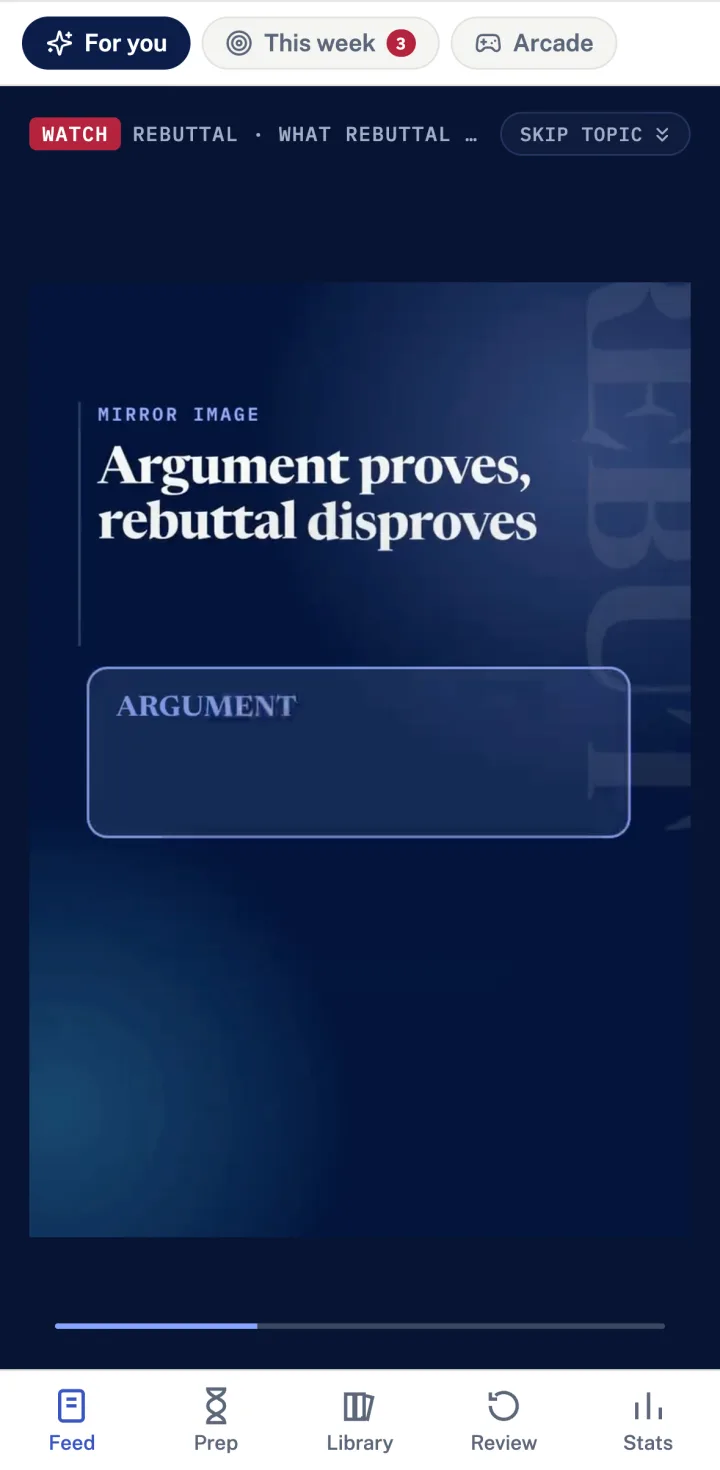
Every DebateBetter class comes with Drill. After each class the coach sets a few short practice sets on that week's skill, and every Monday you get a note on how it went.
PilotWe're running Drill as a pilot this term, so it will keep improving over the next few weeks.
- topics
- 37
- practice sets
- 111
- cards and questions
- 1,500+
- levels, Years 4–12
- 3
How it works
Your child's week.
The coach sets the practice.
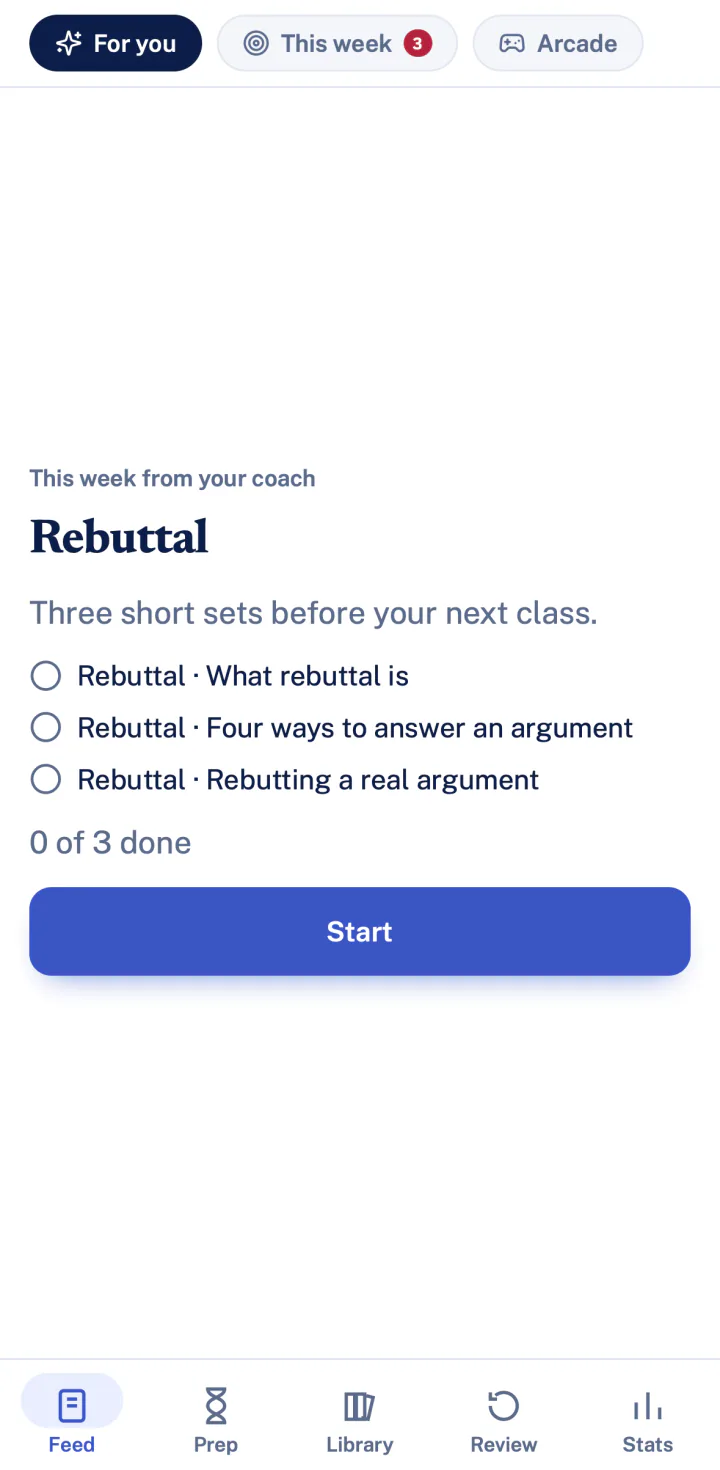
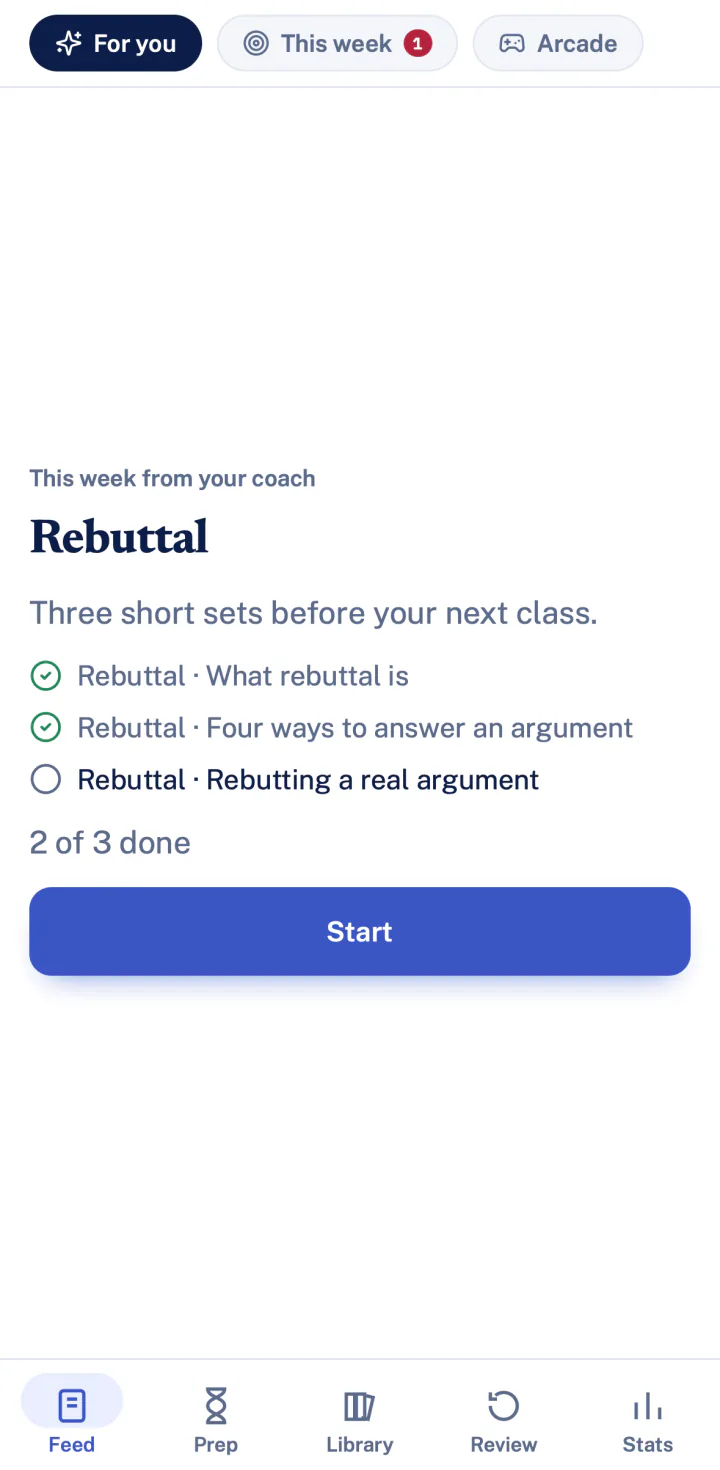
In class, the coach teaches one skill, such as rebuttal. Afterwards the coach sets that week's practice in Drill, due before the next class.
Your child practises in short sets.
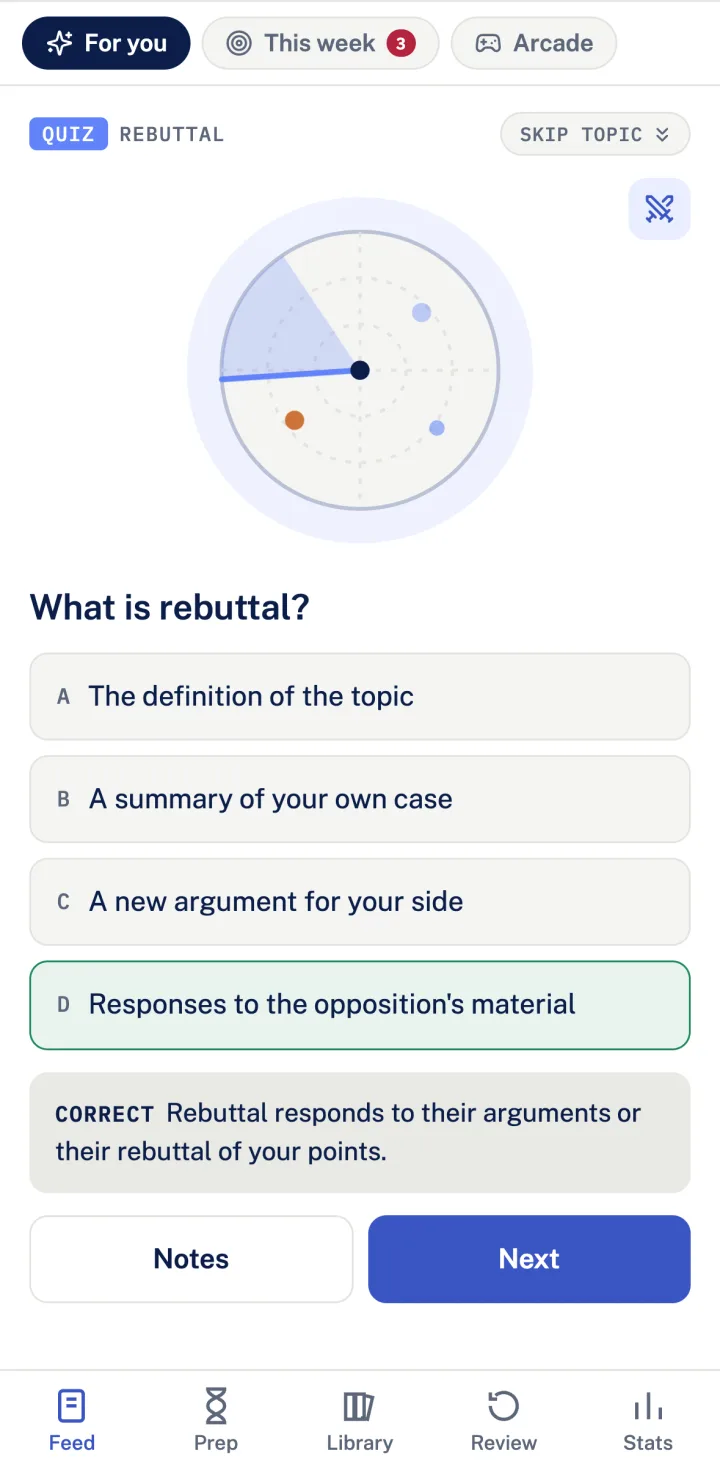
Each set is a 20-second clip, a few cards with one idea each, and quick questions that explain the answer. Anything your child gets wrong comes back later to review.
You get a note every Monday.
Sample note - From
- Debate Better
- Subject
- Sam's week at DebateBetter
Hi Alex,
Last week in Drill
- Practised on four days
- Finished all three sets the coach set
- Still working on: Weighing
This week
The coach has set three sets on rebuttal in Drill, due:
- Saturday
The coach's note: “Answer their strongest point first.”
To talk about at home
Should we lower the voting age to 16? Ask Sam for the best argument on each side.
Drill is still a pilot, so it's improving week by week. If anything doesn't work or could be better, just reply and tell us.
Kind regards,
Jade
Try it
Tap through a practice set.
These are real screens from Drill. Tap the phone, or swipe, to see the next one.
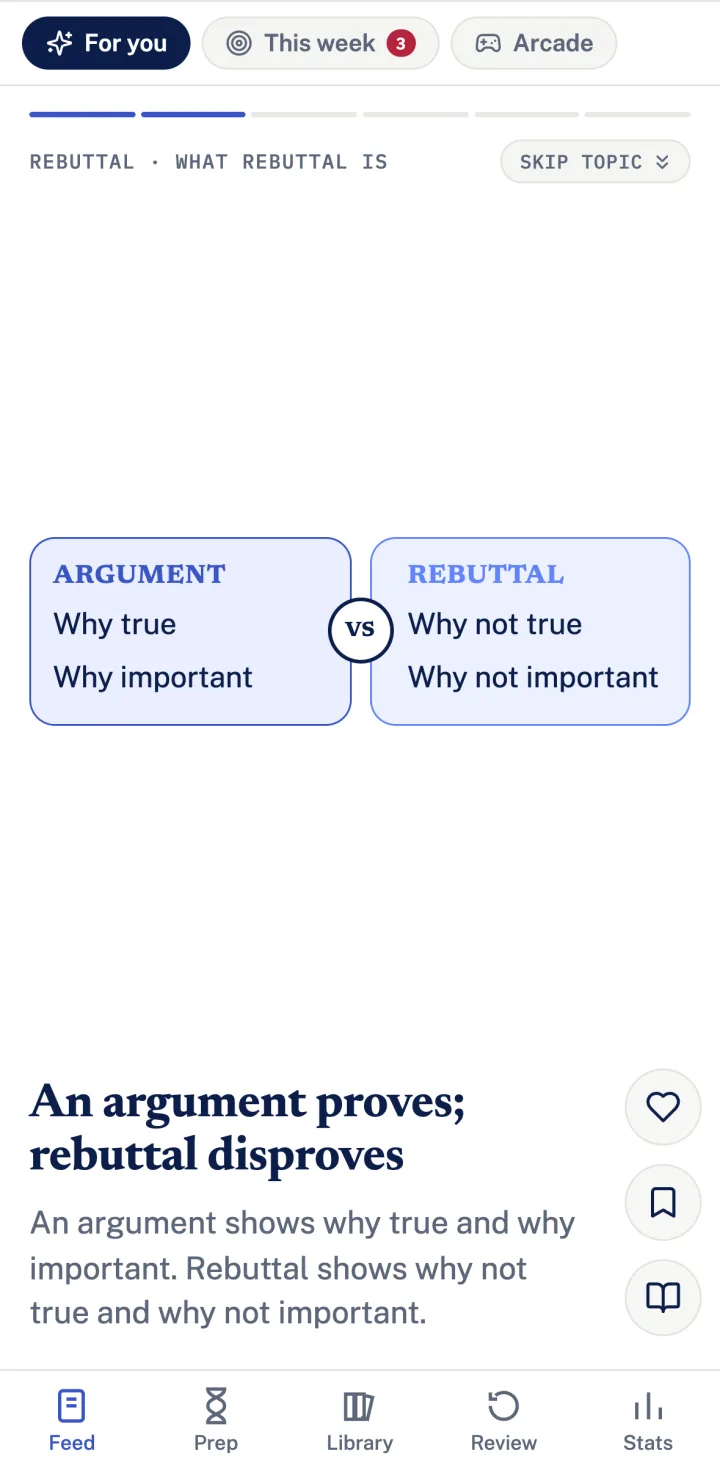
1 of 5
The coach sets the week's practice
After class, the coach picks the sets for the week, due before the next class. They come first when your child opens Drill.
Beginner to advanced
From a first debate to advanced technique.
Drill follows the skills we teach in class, from how a debate works to set-ups, counter-models and weighing. The coach sets each student's level and picks the sets they practise each week, so the practice follows what your child is working on in class.
Debate skills, in order
- 1How a debate works
- 2Each speaker's job
- 3Building your case
- 4Models and counter-models
- 5Stakeholders and ideas
- 6Thinking of arguments
- 7Making an argument
- 8Weighing: why your point wins
- 9Rebuttal
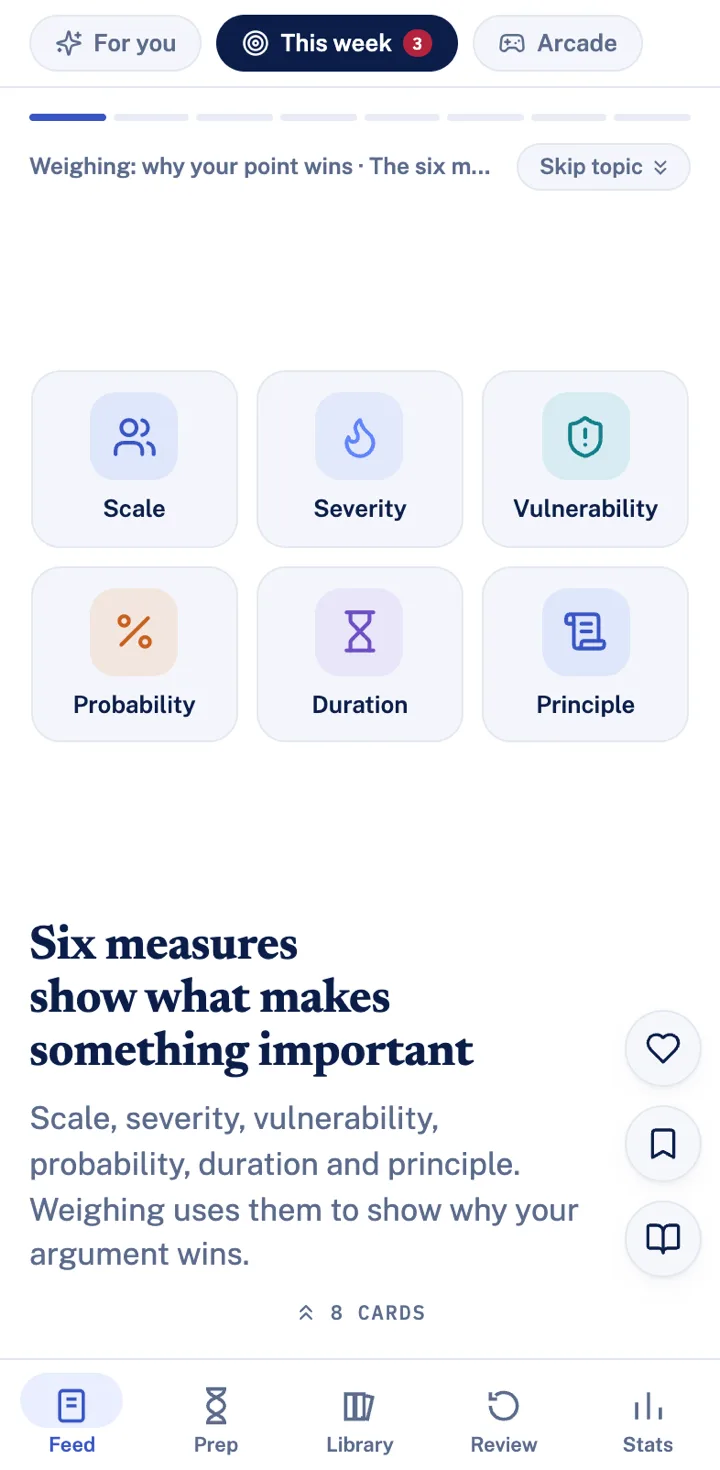
Weighing
The six measures that show why a point wins
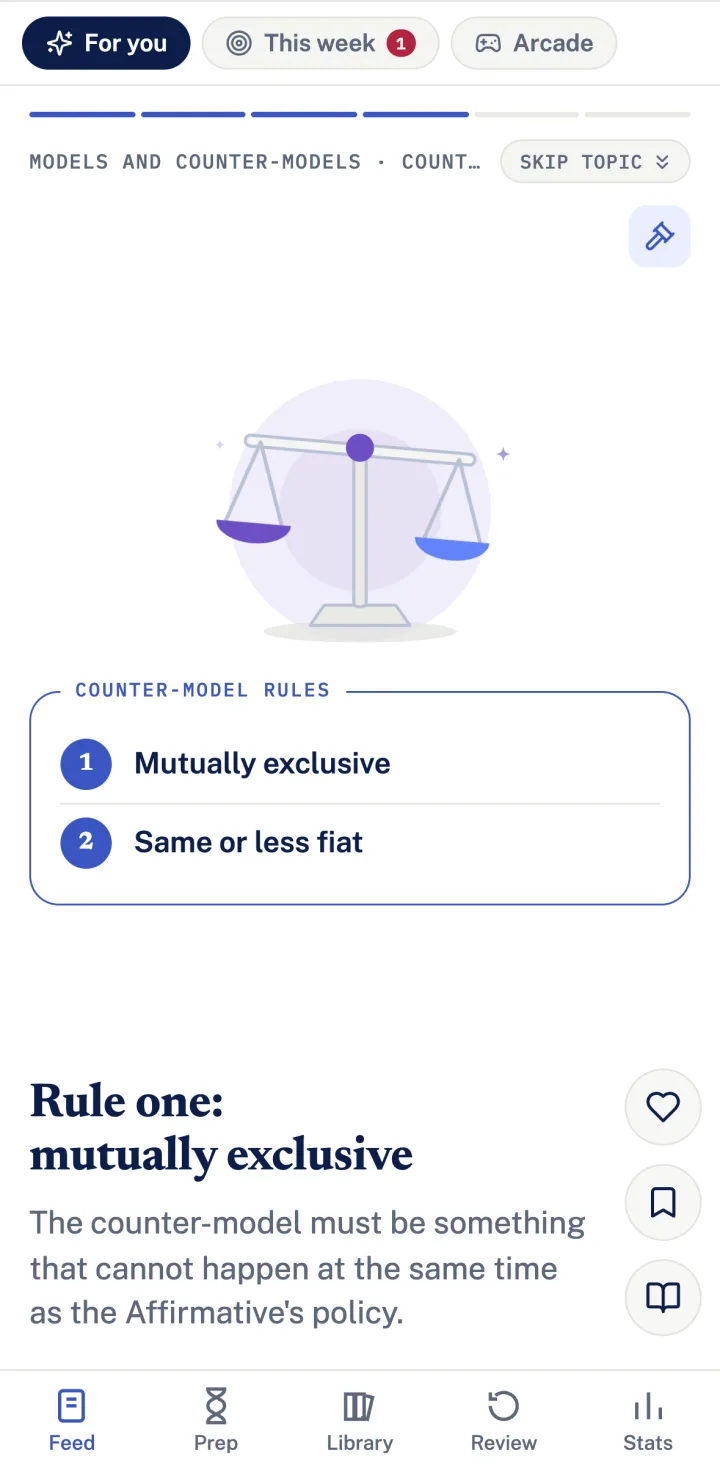
Models and counter-models
The rules a counter-model has to follow
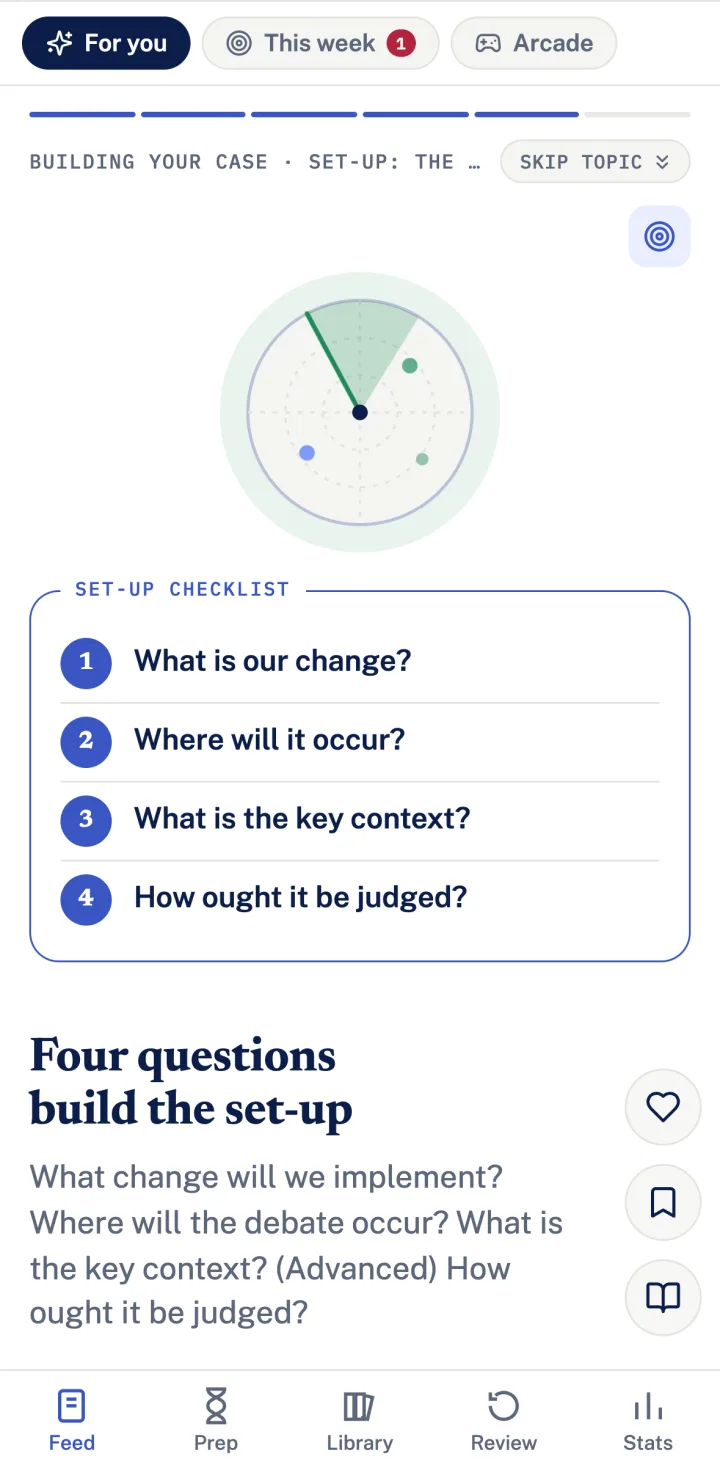
Building your case
Four questions that frame the debate
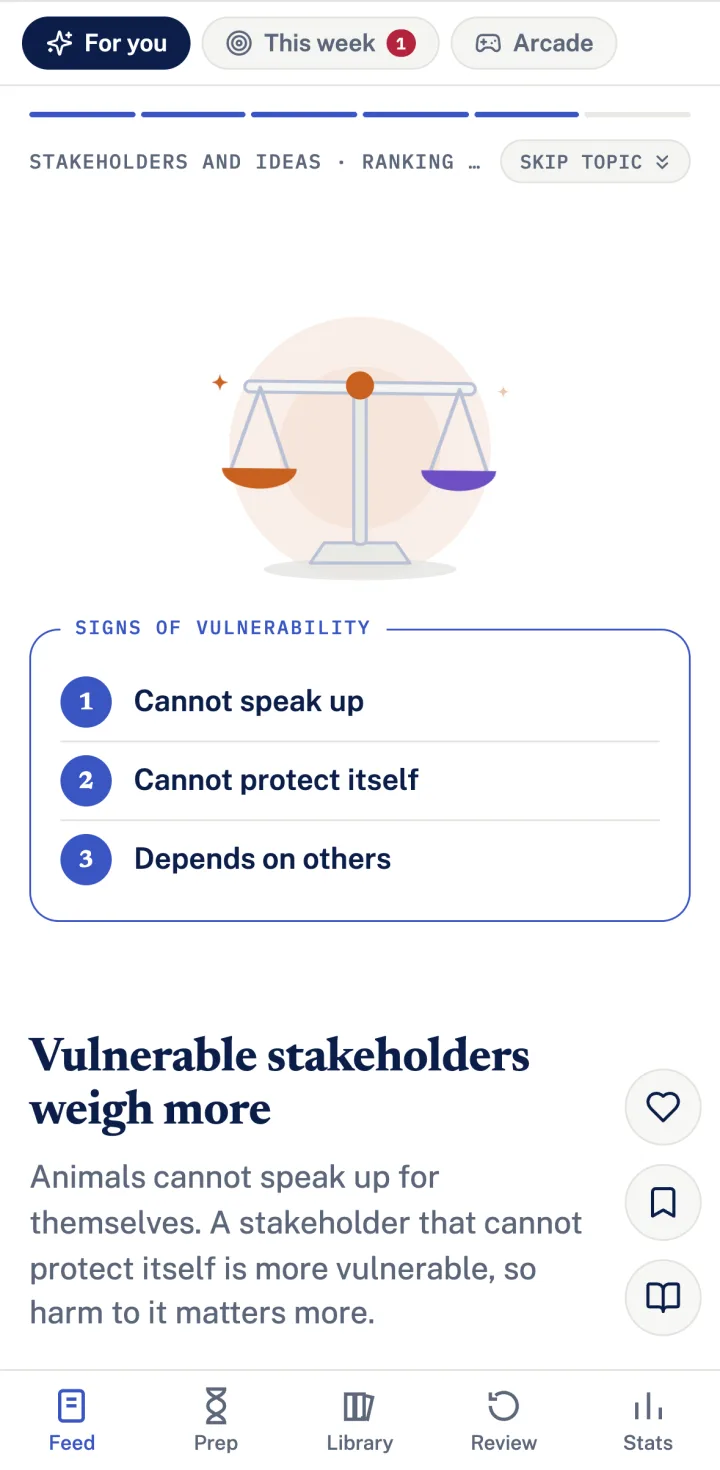
Stakeholders
Why vulnerable stakeholders weigh more
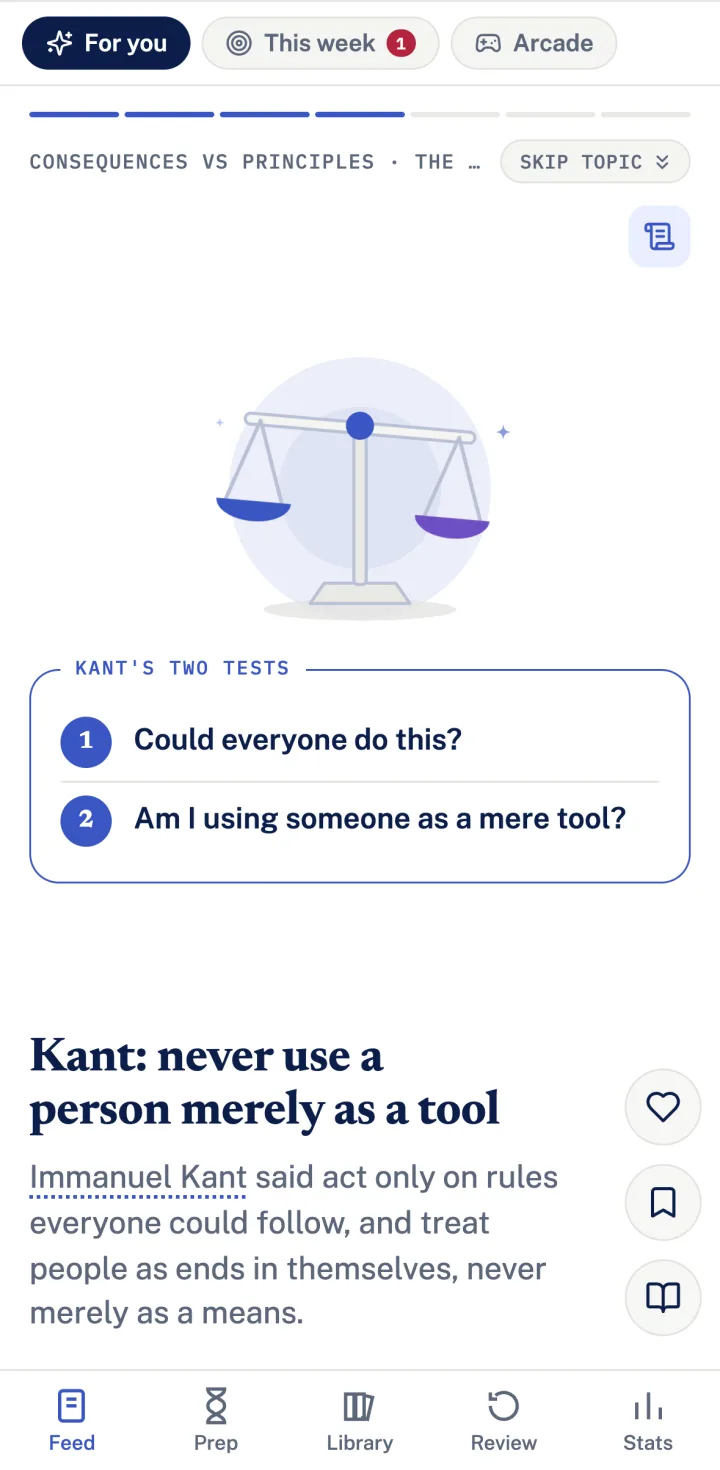
Consequences vs principles
Kant's two tests, for debates about right and wrong
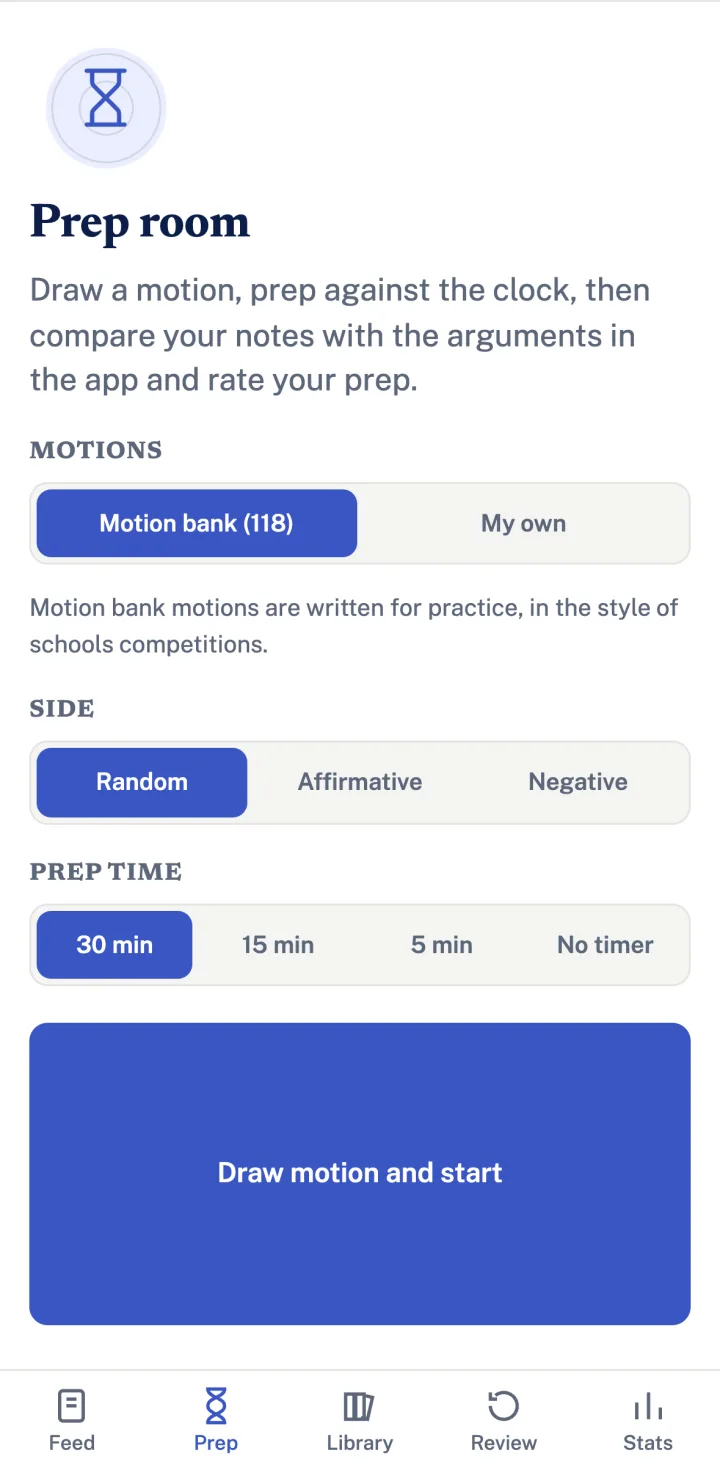
Prep room
Draw a motion and prep against the clock
Beyond the skill
Something to say on any topic.
A debate can be about anything, so most of Drill is knowledge: current events, the big ideas behind arguments, and the motions that come up again and again, with the case on each side and where the facts come from. Students in Years 4 to 6 see the topics chosen for their age.
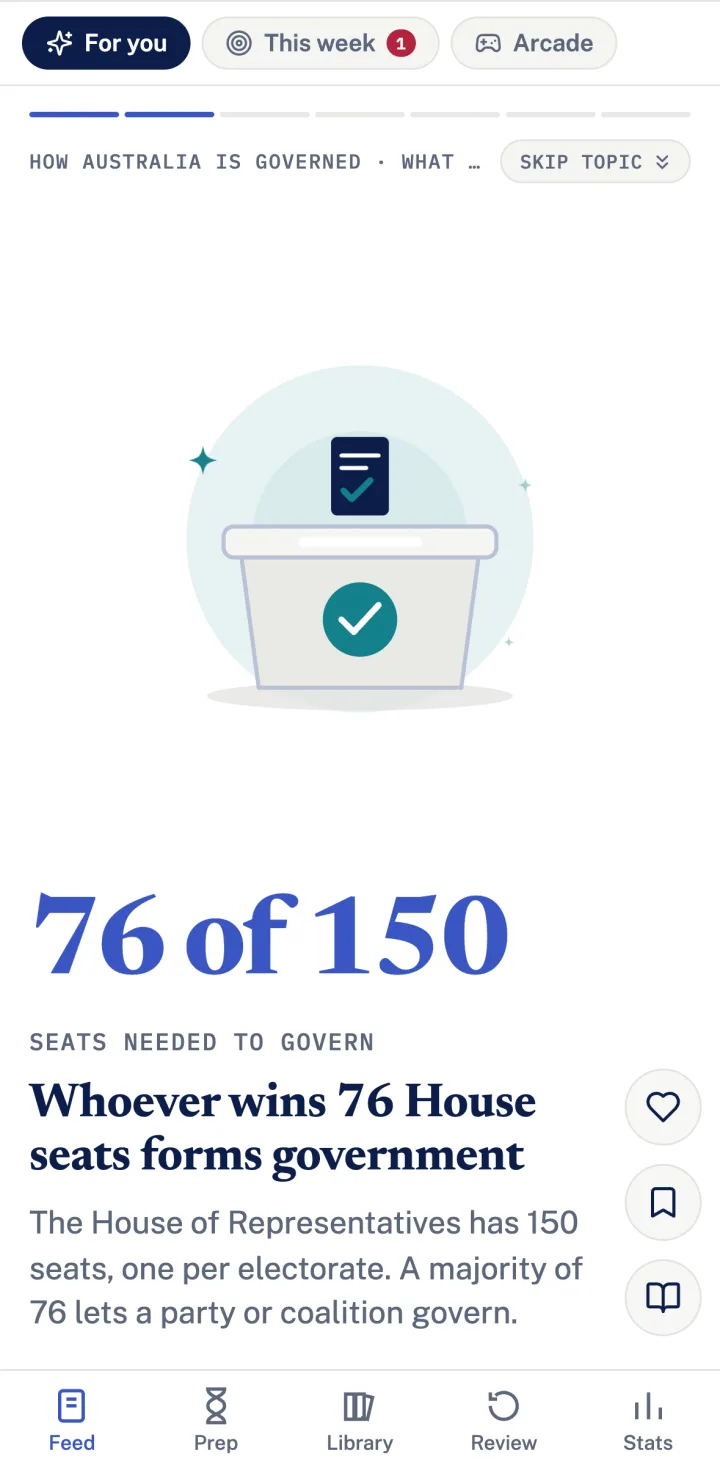
How Australia is governed
76 of 150: how a government is formed
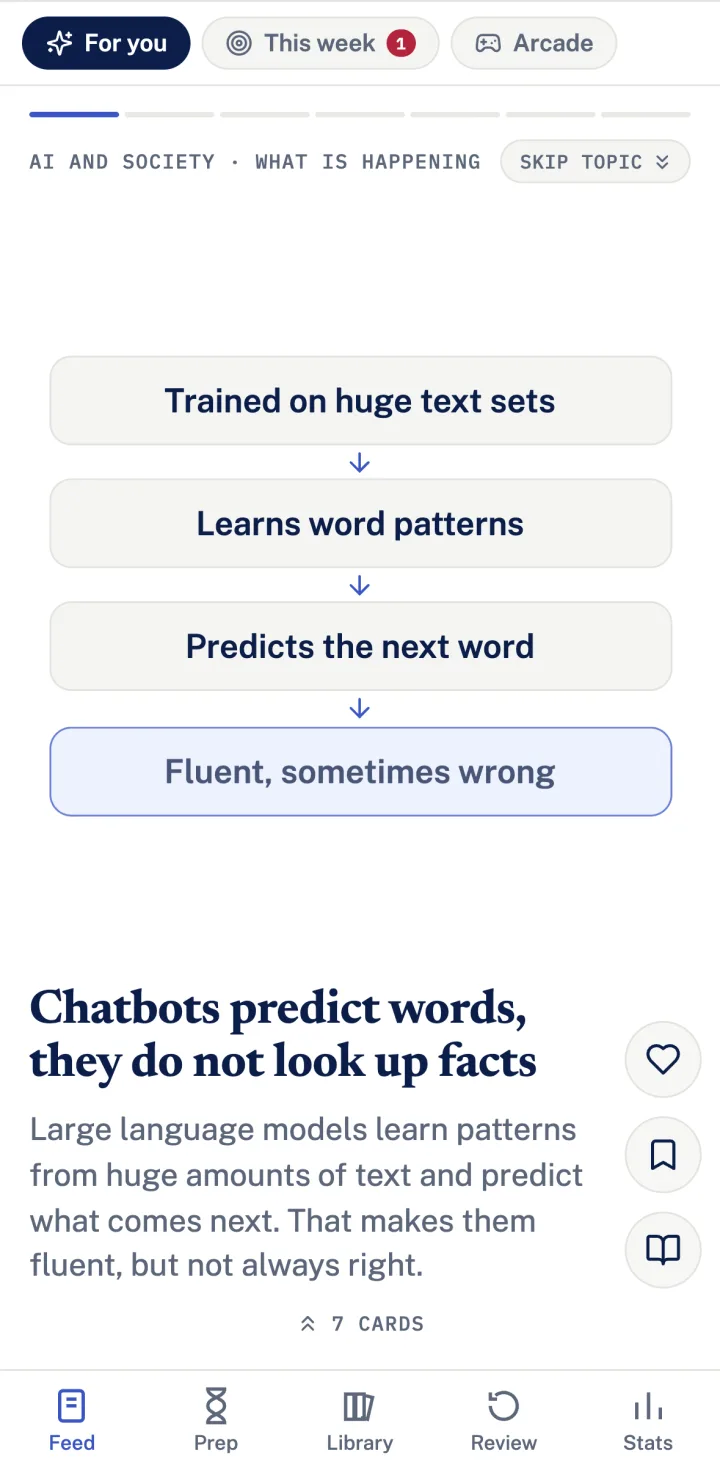
AI and society
Why chatbots can sound right and still be wrong
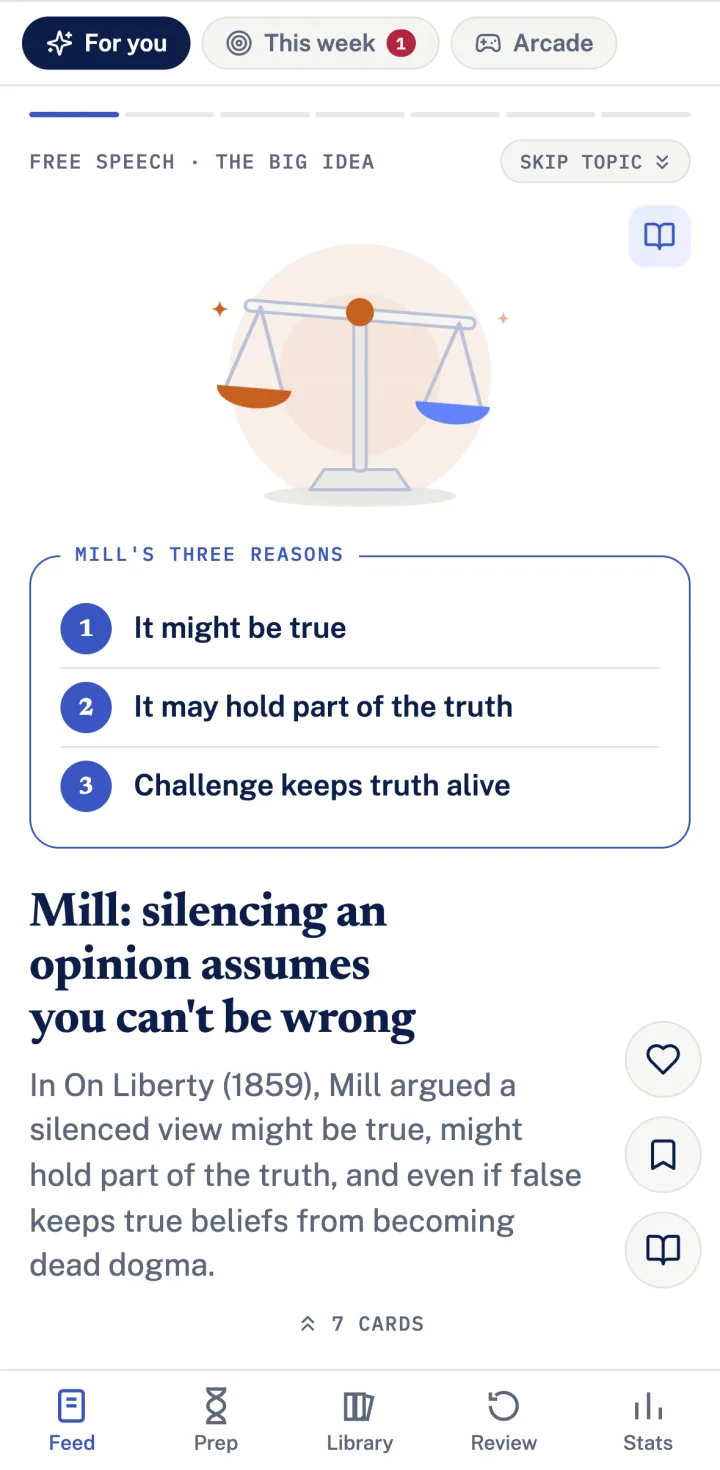
Free speech
Mill's three reasons not to silence an opinion
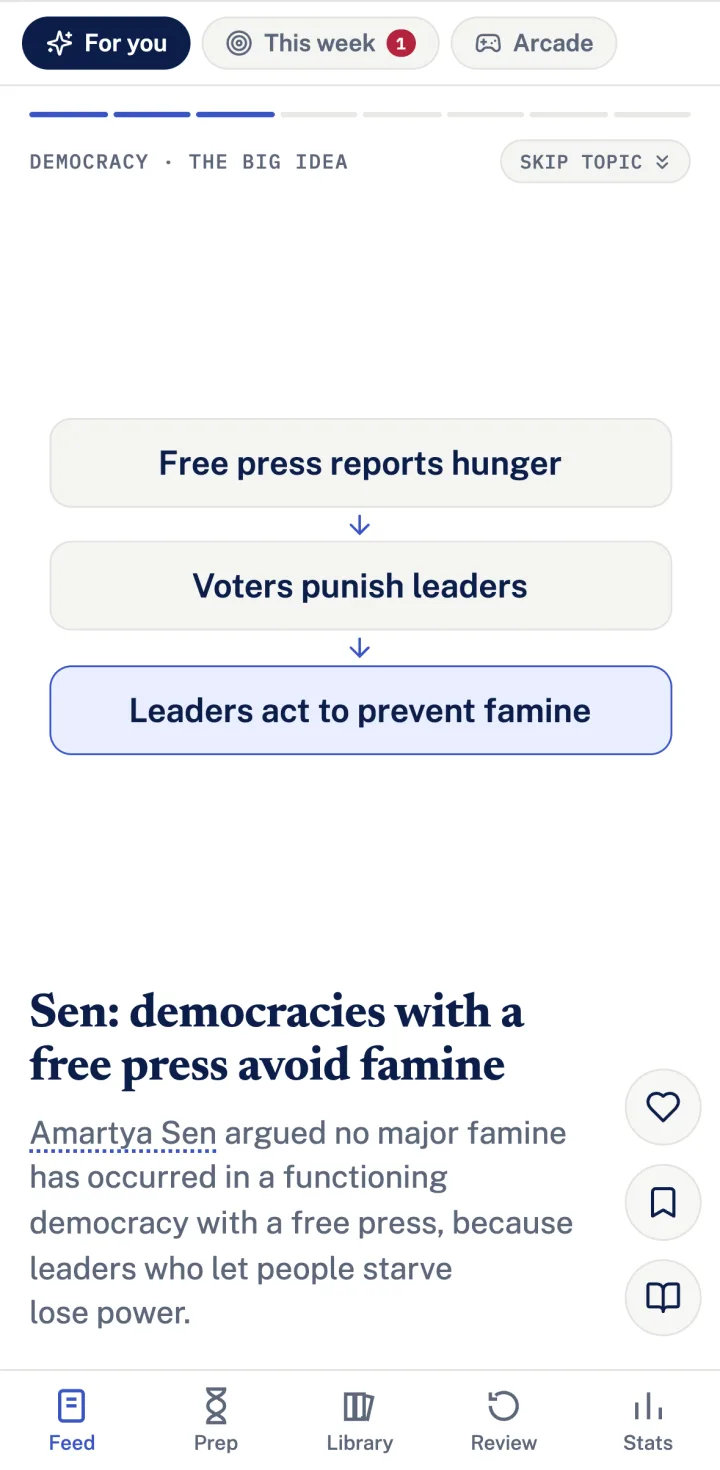
Democracy
Why democracies with a free press avoid famine
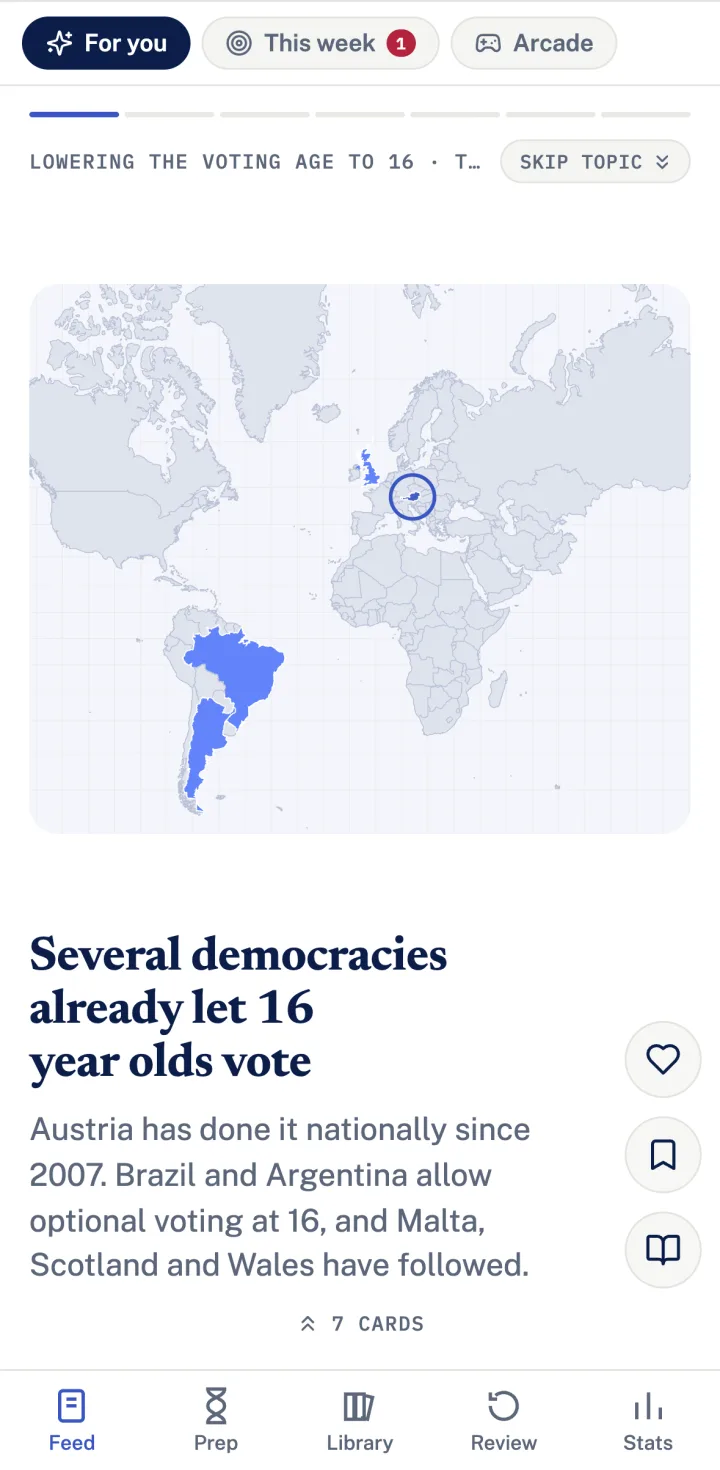
Lowering the voting age to 16
Where 16-year-olds already vote

Nuclear power for Australia
How much of the world runs on nuclear
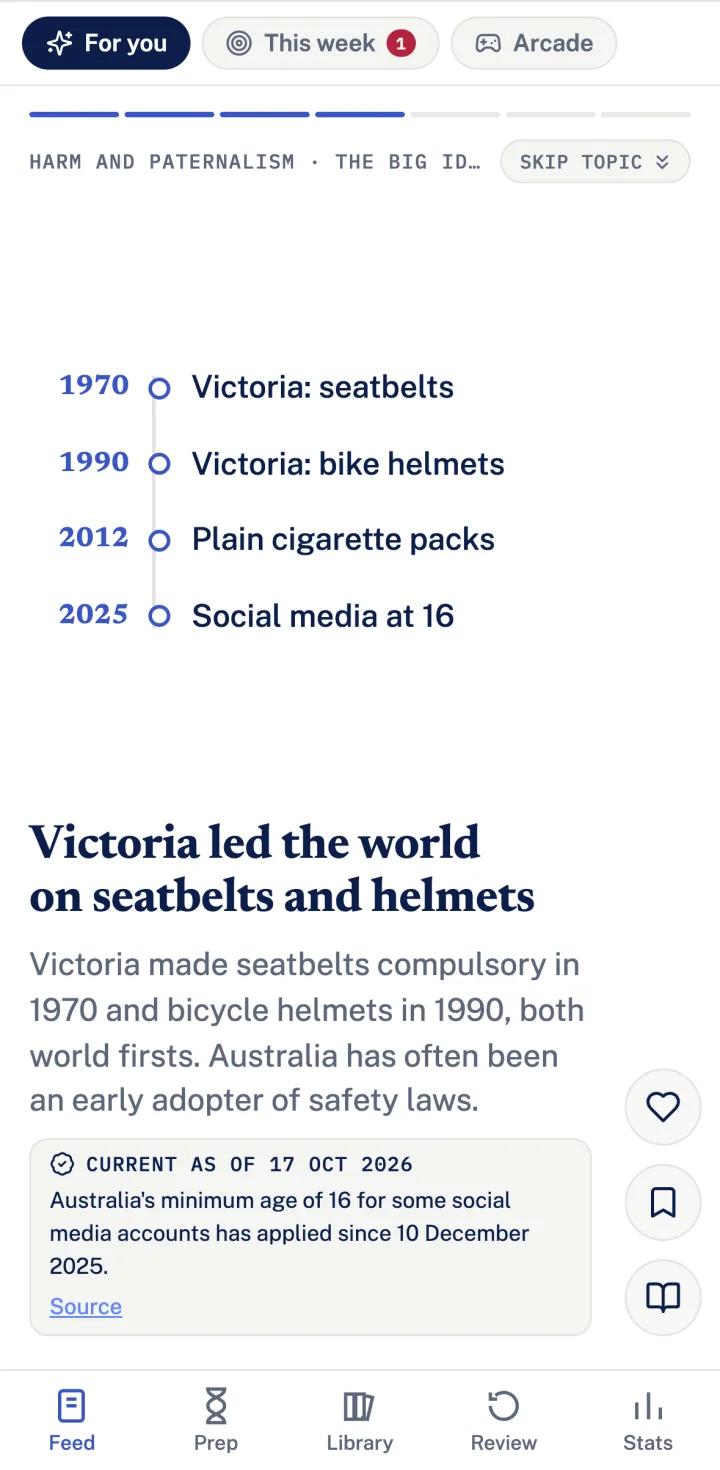
Harm and paternalism
When the law protects people from themselves
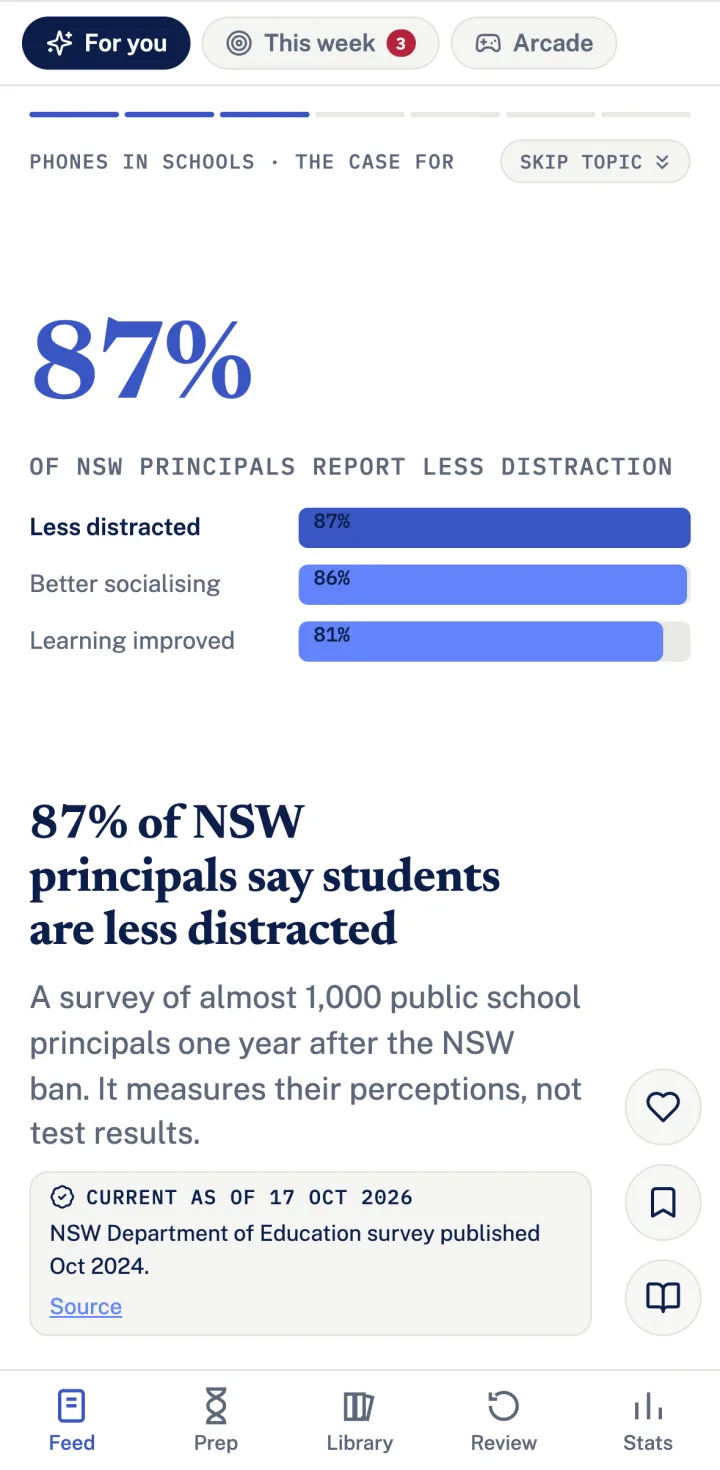
Phones in schools
What NSW principals reported after the ban
The world right now · 10 topics
- The war in UkraineYear 7+
- Israel, Gaza and the PalestiniansYear 7+
- Iran and the Strait of HormuzSenior
- Sudan's civil warYear 7+
- The US, China and TaiwanSenior
- Climate change and the energy shift
- AI and societyYear 7+
- How Australia is governed
- Young people and social mediaYear 7+
- Cost of living, trade and tariffsSenior
Big ideas · 8 topics
- RightsYear 7+
- Harm and paternalismYear 7+
- Consequences vs principlesSenior
- DemocracyYear 7+
- Crime and punishmentYear 7+
- Fairness and equalitySenior
- Free speechYear 7+
- Government vs the marketSenior
Common motions · 10 topics
- Phones in schools
- Lowering the voting age to 16
- Compulsory voting
- Junk food advertising and a sugar tax
- Nuclear power for AustraliaSenior
- AI in the classroom
- Zoos and animal rights
- Banning gambling ads in sport
- Banning homework
- Spending on space exploration
Topics without a label are for every student from Year 4. Year 7+ topics start in Year 7, and Senior topics are for senior students. A topic the coach sets for the week always shows.
Questions
What parents ask.
Does Drill cost extra?
No. Drill is included for every school student at DebateBetter, in group classes and private lessons.
Is Drill finished?
Not yet. We're running Drill as a pilot this term, so it will keep improving over the next few weeks. If something doesn't work or could be better, tell us, and we'll use it to decide what to improve first.
Is it only for beginners?
No. Drill runs from how a debate works to set-ups, counter-models and weighing, and the coach sets the level for each student. Some topics are for senior students only.
Is Drill for primary school students too?
Yes. Students in Years 4 to 6 get all nine debate skills and the knowledge topics chosen for their age. Topics marked Year 7+ and the daily news summary are for secondary students. The coach sets the practice each week, as for every student.
How much time does it take?
A set takes a few minutes. The coach sets a few each week, due before the next class, and there is more to explore for students who want it.
Is it safe?
Drill keeps only your child's first name, class and practice record. There is no chat, no messaging and no way for students to contact each other. Each student signs in with a personal code, and the daily news summary is checked by our staff before students see it.
Who can see my child's progress?
Your child's coach and our founders. You see it in the Monday note.
What do we need to do?
Nothing to set up. When your child starts, we email you a personal code. Drill works in the browser on any phone, tablet or laptop, with nothing to install.
Can we stop using it?
Yes. Tell us and we'll switch the code off and delete the practice record.
Start here
Every class comes with Drill.
Our classes are small, with a live debate every session and practice in between. Tell us your child's year level and we'll find the right class.