How much does debating coaching cost in Australia?
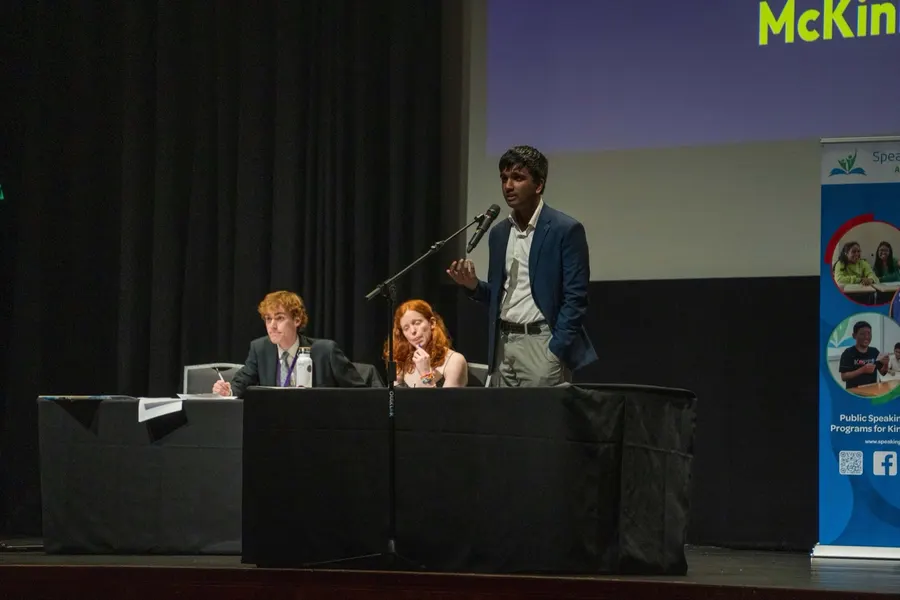
Jehiel Pather, NSW State Team
· 7 min read
The short answer
The price of debating coaching depends mostly on whether it's a group class or private lessons, how many students share the coach, who the coach is, and how it's billed. The fairest way to compare providers is to work out the cost per hour for your child and how much of that hour they spend speaking and getting feedback. At DebateBetter, online group classes of six or fewer students are $50 an hour per student, and each class runs for two hours ($100 a class, billed in blocks of five). Private coaching is $150 an hour.
Parents often ask us what debating coaching should cost, usually after finding prices that seem to have nothing in common. One provider quotes a term fee, another an hourly rate, a third a price per session with no mention of how long the session is or how many children are in it. This guide explains what actually drives the price, how to compare offers on equal terms, and what we charge.
Group classes or private lessons
This is the biggest factor. In a private lesson your child has the coach's full attention for the whole hour, so the price reflects one coach for one student. In a group class the coach's time is shared, so each family pays less, but the student also gets less individual attention.
The two do different jobs. Private coaching is good for working on a particular weakness, preparing for a trial or a big speech, or fitting around a busy timetable. A group class gives your child something a private lesson can't: real opponents. Debating is a team activity against another team, and the practice of rebutting someone your own age, then working with teammates on a reply, is hard to recreate one on one. Plenty of students do a mix of both over a year.
How many students share the coach
In a group class, size matters more than almost anything else. A school debate has three speakers a side, so a class of six can run a full debate with every student speaking. A class of twelve or fifteen can't, which means half the room is listening rather than speaking.
A cheaper hourly rate in a large class can work out as a more expensive speech. If one class costs less but your child speaks once a fortnight, and another costs more but your child gives a speech and gets feedback on it every session, the second is better value. When you compare prices, ask how many students are in the class and how many speeches each one gives per session.
Who the coach is
Coaches who have debated at a high level are usually in demand, and their time costs more. Debating results are published (state team lists, tournament results, speaker rankings), so you can check a provider's claims rather than taking words like “award-winning” on trust. Ask who will actually take your child's class, not who founded the business.
Competing well and coaching well are different skills, so it's also fair to ask whether the coach has taught students of your child's age before.
Online or in person
In-person classes carry the cost of a room, and someone has to get your child there and back. Online classes don't, and they let a provider draw on coaches who live anywhere. That doesn't make online automatically cheaper or better, but it does change what you're paying for. We've written more about the trade-offs in online versus in-person debating coaching.
How it's billed
Term fees, blocks of classes and pay-as-you-go all exist. None is better in itself, but they make prices hard to compare. To put two offers side by side, work out:
- the total you pay up front,
- how many hours of coaching that buys,
- the cost per hour per student,
- what happens if your child misses a class or you need to stop.
The last point is easy to skip and often matters most. Read the cancellation terms before you pay, whoever you enrol with.
A quick way to compare
| Question | Why it matters for the price |
|---|---|
| How many students are in the class? | Decides how often your child speaks in each session. |
| How long is each session? | A price per session means little without the length. |
| Who takes the class, and what is their record? | You're paying for the coach's judgement and feedback. |
| What happens between classes? | Material, homework or recorded lessons add to what each hour is worth. |
| What's the total, and what are the cancellation terms? | Tells you what you're committing to. |
What you don't need to pay for
School debating itself is usually run through the school, with a teacher coordinating teams and the school entering competitions. If your child is new to debating, joining the school team is the place to start, and you may find that's all they want. Coaching is worth paying for when your child wants more speaking practice than the school season gives them, wants feedback that's more detailed than a result on the night, or is aiming at something like state team selection.
You also don't need to buy a long commitment to find out whether coaching suits your child. A single paid trial class tells you more than any brochure.
What DebateBetter costs
Our classes are online, in groups of six or fewer students, so everyone speaks and gets feedback every session. Here is what they cost.
| Group classes | $50 an hour per student. Each class runs for two hours, so $100 a class, paid class by class or for the rest of the term at $90 a class. |
|---|---|
| Private coaching | $150 an hour, one to one, billed in blocks of five lessons ($750). |
| Trying it first | The first class can be paid on its own at the normal price. |
Every coach has represented their state or country in debating or holds a major university debating championship, and you can check their records on the coaches page. Class times and enrolment are on the programs page. If you're still weighing up whether your child is ready, our guide on when kids can start debating may help.
Common questions
- Is private debating coaching worth the extra cost?
- It depends on what your child needs. Private lessons suit a student preparing for something specific, such as state team trials or a big speech, or one who needs a flexible time. Group classes give students practice debating against other people, which private lessons can't.
- Why is group debating coaching usually charged per hour or per term?
- Providers price differently. Some charge a term fee, some bill a block of classes, and some charge per session. Divide the total by the number of hours of coaching to compare them fairly.
- How much does DebateBetter cost?
- Group classes are $50 an hour per student. Each class is two hours, so $100 a class, paid class by class or for the rest of the term at $90 a class. Private coaching is $150 an hour.
- Can my child try a class before we commit to a block?
- Yes. The first class can be paid on its own at the normal price: $100 for a two-hour group class, or $150 for a one-hour private lesson.
- Does school debating cost anything?
- Most school competitions are entered through the school, and any fees or costs are set by the school and the competition organiser. Ask your child's debating coordinator.