Debating coaching in Melbourne: a guide for parents
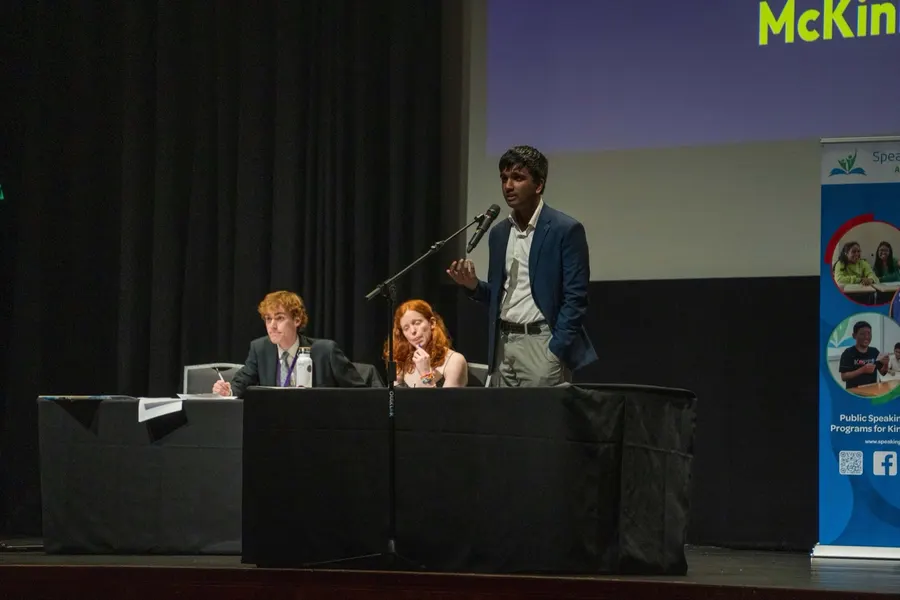
Jehiel Pather, NSW State Team
· 7 min read
The short answer
Most Melbourne students debate through the Debaters Association of Victoria (DAV), whose Schools Competition runs for Years 9 to 12 in four grades, from prepared topics in Year 9 to mostly secret topics with one hour of preparation in Years 11 and 12. Years 7 and 8 start in the DAV's Junior Secondary Program. The DAV also selects the Victorian team for the National Schools Debating Championships through a trial day of secret-topic debates. A good coach gives every student a speech and specific feedback each session. DebateBetter teaches online in groups of six or fewer, and Melbourne is on the same time as Sydney all year.
Victorian families often ask us how online coaching would sit alongside the debating their child already does at school. In Victoria that almost always means the Debaters Association of Victoria, so this guide starts there. The competition details come from the DAV's own website and its 2026 handbook. They change from year to year, so check with the DAV or your school's debating coordinator before you plan around anything here.
How school debating works in Victoria
The DAV's Schools Competition is for students in Years 9 to 12. Schools enter teams of four to nine students, and the debates are three-on-three. It runs in regions across inner and outer Melbourne, Geelong, Ballarat and Bendigo, and there is also an online version on Zoom where the speakers in a team don't have to be in the same place. Online teams join the in-person teams for finals.
Each region has five rounds through the year. The fifth round is power-paired, so after round four the top two teams on the ladder meet each other, then the next two, and so on. Teams on top of their regional ladder after round five go through to a finals series that ends in octofinals, quarterfinals, semifinals and a grand final.
The competition runs in four grades, and the step up from one to the next is bigger than parents tend to expect. This is how the 2026 Schools Competition Handbook sets them out:
| Grade | Year level | Speech length | Topics over five rounds |
|---|---|---|---|
| D Grade | Year 9 | 4 to 5 minutes | 5 prepared |
| C Grade | Year 10 | 5 to 6 minutes | 2 prepared, 1 advised, 2 secret |
| B Grade | Year 11 | 6 to 8 minutes | 1 prepared, 4 secret |
| A Grade | Year 12 | 6 to 8 minutes | 1 prepared, 4 secret |
A prepared topic is published with the draw at the start of the year, so the team can research it for weeks. An advised topic gives the general subject area in advance and the exact wording an hour before the debate. A secret topic is announced one hour before. During that hour the team works in a room on its own: printed material is allowed, but laptops and phones aren't (except to keep time), and no teacher, parent or coach may go in or talk to them. Students can debate in a higher grade than their year level, but not a lower one.
So a student moving from Year 9 to Year 11 goes from four-minute speeches on topics they've researched for weeks to eight-minute speeches on topics they first see an hour before they speak. That jump is where a lot of capable debaters struggle, and it's the part coaching can help with most.
Years 7 and 8, and other DAV competitions
Younger students usually start in the Junior Secondary Program, an introduction to debating for Years 7 and 8 who haven't been in the Schools Competition. It runs over four sessions in Terms 3 and 4, with training and three friendly interschool debates, face to face or online. The DAV says that in 2026 it can't take teams of students below Year 9 in the senior competition, apart from exemptions.
The DAV runs several other competitions that are worth knowing about:
- A British Parliamentary competition with Junior (Years 7 and 8), Intermediate (Years 9 and 10) and Senior (Years 11 and 12) divisions. Each debate has four teams of two, and the adjudicator ranks the teams from first to fourth, which rewards a different set of skills from three-on-three.
- A Women's Competition for female-identifying students, who sign up individually and are placed in random teams of three for three secret-topic debates with an hour of preparation.
- Regional Debating competitions in regional centres, with Year 7 and 8 and Year 9 and 10 divisions, run as a training session and a competition day.
The DAV also lists a primary schools program, public speaking competitions and holiday debate camps on its schools page.
How the Victorian state team is chosen
The DAV selects the Victorian Schools Team that goes to the National Schools Debating Championships, the week-long tournament between the states and territories (we explain it in our guide to the national schools championship). The DAV lists the trials for the 2027 team as running late in 2026, with students registering interest through a form on its site, and notes that trials often fill before the deadline. There is a $15 fee per student, and the DAV accepts waiver requests.
On trial day, students are put into random teams and given a speaker position, with preferences taken into account where possible. They debate two secret topics in front of the selectors, and a small number are asked back for a call-back round. The DAV says selectors look at debating technique, and also at attitude, willingness to support teammates and potential to grow with further training. Because the final team is made up of students who may not have met before, the selectors want to see that a student can work with anyone.
After trials, twelve students train as a squad every Sunday for three weeks. A team of seven then trains for roughly ten more weeks before the national championship.
Two things follow from that for preparation. A trialist needs to be comfortable with secret-topic preparation in a team of strangers, and needs to be able to speak well in any position. Our guide to NSW state team selection covers a similar process in more detail.
What to look for in a coach
The same things matter in Melbourne as anywhere else. Ask which teams a coach has debated for and what they won, because debating results are published and you can check them. Ask how many students are in a class and how many speeches each one gives per session. In a large class a student may not speak at all, and speaking is where improvement comes from. Ask what feedback looks like: it should name a moment in the speech and give the student one specific thing to do differently next time.
For a Victorian student, also ask how the coach practises secret-topic preparation. A useful session puts students on a clock with a topic they haven't seen, then has them speak on what they built. Our lessons on structuring an argument and rebuttal show the kind of material that makes an hour of preparation go further. If you're weighing up online and in-person options, our guide to online versus in-person coaching goes through the trade-offs.
Online classes on Melbourne time
Victoria and New South Wales are on the same time zone and both move to daylight saving on the same dates, so our class times, which are set in Sydney time, are the same in Melbourne all year. Term 4 group classes run on Mondays, Wednesdays and Fridays from 7 to 9pm, and on Sundays from 10am to 12pm or 7 to 9pm. DAV rounds are on weeknights from Monday to Thursday, so check your child's competition night before choosing a class.
Debating works well over video because only one person speaks at a time, and the DAV runs an online version of its own Schools Competition on Zoom. What makes online classes work is a small group and students who keep their cameras on.
Where DebateBetter fits
DebateBetter is an online academy with no venue in Melbourne or anywhere else. Classes have six or fewer students, so everyone speaks and gets feedback every session, and they're grouped by year level and experience. Our coaches include former NSW state team captains, an Auckland representative debater, and Jack Glass, joint best speaker at the 2026 Australian British Parliamentary Debating Championship. Their records are on the coaches page and the results page.
Group classes are $50 per student per hour, and each class is two hours, so $100 a class, paid class by class or for the rest of the term at $90 a class. Private coaching is $150 per hour. Class times and enrolment are on the programs page, or get in touch if you'd like to talk it through first.
Common questions
- What debating competition do Melbourne schools enter?
- Most enter the Debaters Association of Victoria's Schools Competition, which is for Years 9 to 12 and runs in regions across Melbourne and regional Victoria, with an online version on Zoom. Years 7 and 8 usually start in the DAV's Junior Secondary Program.
- What is a secret topic in DAV debating?
- A secret topic is announced one hour before the debate. Teams prepare in a room on their own with printed material but no phones or laptops, and no teachers, parents or coaches may communicate with them. Year 11 and 12 grades debate four secret topics in five rounds.
- How is the Victorian state debating team selected?
- The DAV runs a trial day where students are placed in random teams and debate two secret topics in front of selectors, with a call-back round for a small number. Twelve students then train as a squad, and a team of seven goes on to the National Schools Debating Championships.
- What time are DebateBetter's classes in Melbourne?
- Melbourne and Sydney share a time zone and both use daylight saving, so our class times, which are set in Sydney time, are the same in Melbourne all year.
- Do you have a venue in Melbourne?
- No. DebateBetter has no venue in any city. Every class runs online over Zoom, so Melbourne students join from home.
- How much does debating coaching cost?
- At DebateBetter, group classes are $50 per student per hour in groups of six or fewer. Each class runs for two hours, so $100 for each two-hour class, paid class by class or for the rest of the term at $90 a class. Private coaching is $150 per hour.