What is the Premier's Debating Challenge?
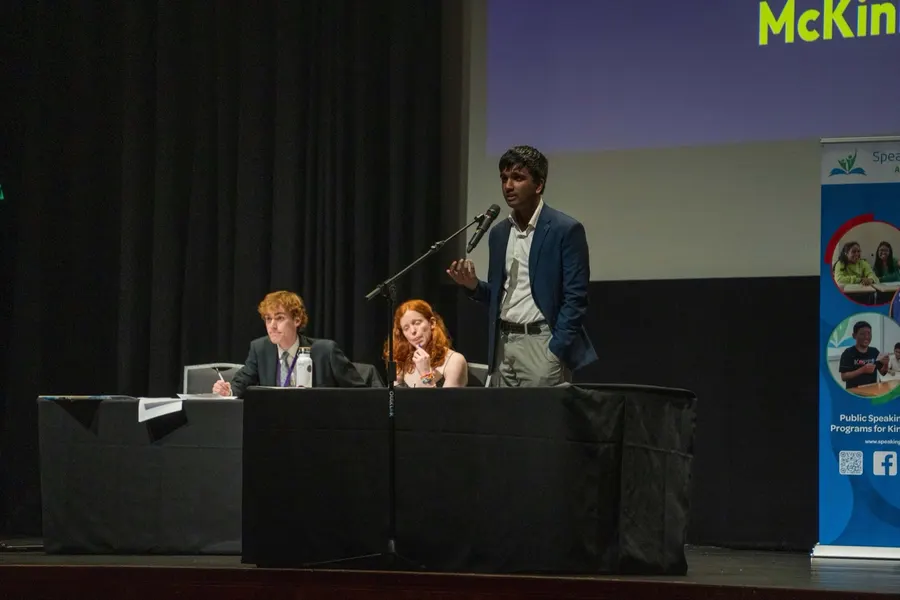
Jehiel Pather, NSW State Team
· 7 min read
The short answer
The Premier's Debating Challenge is a state-wide debating competition for NSW government schools, run by the Department of Education's Arts Unit. It has four divisions: Years 5 and 6, Years 7 and 8, Years 9 and 10, and Years 11 and 12. Every debate is a one-hour preparation debate, so teams get the topic and their side an hour before they speak. Schools enter teams through the Arts Unit for $100 a team; students don't enter on their own.
If your child is at a NSW public school and has been picked for the debating team, there's a good chance the team is entered in the Premier's Debating Challenge. It's the main debating competition for government schools in the state, and it runs from Year 5 all the way to Year 12. Here is how it works, from the NSW Department of Education's Arts Unit, which runs it. Dates change every year, so treat the ones below as a guide to the shape of the year and check the Arts Unit pages for your child's division.
Who runs it and who can enter
The Challenge is run by the Arts Unit, part of the NSW Department of Education, and is open to NSW government schools. Schools enter teams; individual students can't sign up on their own, so the first step is always the school's debating teacher.
There are four divisions, each run state-wide. Students can debate in their own division or an older one, so a strong Year 10 can be part of a Years 11 and 12 team.
| Division | Speaking time | How it's decided |
|---|---|---|
| Years 5 and 6 | 4 minutes | Zones, regional knockouts, then a three-day state championship |
| Years 7 and 8 | 6 minutes | Zones, regional knockouts, then a three-day championships camp |
| Years 9 and 10 | 8 minutes | Zones, then a knockout finals series to a state final |
| Years 11 and 12 | 8 minutes | Knockout debates for the Hume Barbour Trophy |
The speaking times come from the Arts Unit's rules. A warning bell rings before time is up, and a continuous bell rings shortly after it (at 8½ minutes in the senior divisions).
Every debate is a one-hour preparation debate
This is the part that surprises parents most. Students don't research a topic for weeks. According to the Arts Unit, teams find out the topic and their side one hour before the debate, then prepare in a room with pens, blank paper and cards, a timer and a whiteboard. Phones, notes, templates and research aren't allowed, and no one outside the team can help.
Each team has four members. Three speak, and the fourth is the team adviser, who helps during preparation and the debate. The four can change from debate to debate, which lets a school rotate students through the team across the year.
One-hour preparation rewards a particular set of skills. A team needs to agree quickly on what the debate is really about, split up the arguments sensibly between three speakers, and anticipate what the other side will say. Students who have practised building arguments from scratch and rebutting on the spot have a real advantage, because there is no time to look anything up.
How zones and knockouts work
The three younger divisions start with zones. The Arts Unit groups teams into zones of about six, and each team debates the others in its zone on dates the schools agree between themselves. The team with the best record becomes zone champion and goes on to knockout finals.
Years 5 and 6
Each team has four zone debates, running from the start of Term 2 to mid-Term 3. Zone champions go into regional knockout finals, and the ten regional champions attend a three-day state championship at Stanwell Tops in mid-November. The division began in 1995, when the Hunter region challenged the rest of NSW to send its best primary team to Newcastle, and the winner still receives the Hunter Challenge Trophy.
Years 7 and 8
Teams have three zone debates before mid-Term 3, each with a set theme (in 2026: education, sport, and civics and citizenship). Regional knockout finals follow, and ten regional champions go to a three-day championships camp in Sydney, held in December in 2026. The state champion receives the Lloyd Cameron Cup.
Years 9 and 10
This division also has three zone debates with themes (in 2026: education, media and technology, and politics), due by mid-Term 3. Zone champions then enter a knockout series that runs from August to November and ends in a state final. It's a big competition: the Arts Unit reports 342 teams entered in 2025.
Years 11 and 12
The senior division has no zones. It's a knockout competition that starts in February. A team that loses early has one “life”, usable in the first four rounds: it stays in the competition but doesn't advance, and debates another team that also needs a win. A second loss knocks the team out, although it can keep taking friendly debates. The 2026 state final was held in August at the University of Sydney's Great Hall. The winner takes the Hume Barbour Trophy, first presented in 1930.
How schools enter, and what it costs
A teacher enters teams through the online form on the Arts Unit's Premier's Debating Challenge page while entries are open. The fee is $100 per team, charged on entry and not refundable. A school can enter up to two teams in each division, but a student can't debate for both of a school's teams in the same division. If entries have closed, the Arts Unit asks teachers to ring the Speaking Competitions Officer about a late entry.
If your child's school doesn't have a team, it's worth asking a teacher whether one could be entered. The school needs four willing students and a teacher to organise debates with the other schools in the zone.
What students get out of it
Every participant gets a certificate, zone winners get certificates of congratulations, state finalists receive medallions, and each division's champion school holds a perpetual trophy. The Arts Unit also notes that adjudicators are usually available after a debate to give feedback, which is worth encouraging your child to ask for.
The more lasting benefit is the format itself. A student who has done a season of one-hour preparation debates learns to think under time pressure and to speak without a script. Those are the same demands students meet later in representative debating. The NSW state team trials, for example, have students speak for six to eight minutes in front of selectors, and students who reach the state team go on to the National Schools Debating Championships.
Other NSW competitions you may hear about
The Premier's Debating Challenge is for government schools. Independent and Catholic schools debate in their own competitions, and the Arts Unit runs other speaking programs alongside the Challenge. Our guide to debating coaching in Sydney gives a short map of the main ones. If your child is new to debating altogether, start with how a debate works.
How we help students in the Challenge
Several of our coaches came through NSW school debating, and our online classes practise exactly the kind of short-preparation debating the Challenge uses: a skill workshop, then a live debate with feedback. Classes have six or fewer students and cost $50 per student per hour, so $100 for each two-hour class. Private coaching is $150 per hour. You can meet the team on the coaches page.
Common questions
- Can my child enter the Premier's Debating Challenge if they go to a private school?
- No. The Arts Unit runs the Premier's Debating Challenge for NSW government schools. Independent and Catholic schools have their own competitions.
- Do students prepare their speeches in advance?
- Not in the usual sense. Every debate in the Challenge is a one-hour preparation debate: teams learn the topic and which side they're on an hour before the debate, and they can't take in notes, phones or research.
- How many students are in a Premier's Debating Challenge team?
- Four. Three speak, and the fourth acts as team adviser during preparation and the debate. The four can change from one debate to the next.
- Can a younger student debate in an older division?
- Yes. Students can debate in any division at or above their own year, so a Year 10 student can be part of a Years 11 and 12 team.
- How does a school enter?
- A teacher enters through the online entry form on the Arts Unit's Premier's Debating Challenge page while entries are open. The fee is $100 per team, and a school can enter up to two teams in each division.