How can I help my child with public speaking nerves?
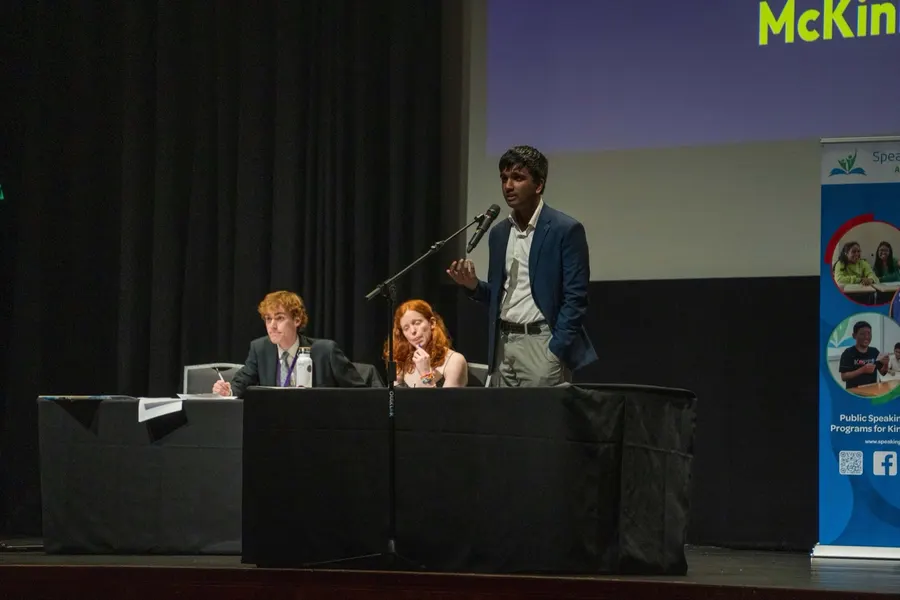
Jehiel Pather, NSW State Team
· 7 min read
The short answer
Nerves before a speech are normal, and most children keep feeling them for a while; what you can help with is speaking well despite them. The things that help most are practice out loud in front of a small, friendly audience, a speech your child knows the structure of rather than one memorised word for word, a strong first line they can say on autopilot, and calm, specific praise afterwards. Avoid telling them not to be nervous, and keep feedback to one thing at a time.
Every coach has met the student who can argue brilliantly at the dinner table and freezes the moment they stand up in front of a room. Nerves are the most common thing parents raise with us, and they're rarely a sign that a child isn't suited to speaking. This is the advice we give parents, drawn from years of coaching nervous speakers and being one.
Nerves don't have to go away
Experienced debaters still get nervous before a big round. The difference is that they've given enough speeches to know the nerves pass once they start talking, and that a racing heart doesn't mean the speech is going badly.
So aim to give your child enough practice and enough structure that they can do a good job while feeling nervous, rather than trying to make them feel calm. That takes the pressure off both of you. A child who is told they shouldn't be scared now has two problems: the fear, and the sense they're failing by having it.
Practise out loud, to a person
Reading a speech over silently is not practice. The words come out differently when you say them, and the first time a child hears their own speech out loud shouldn't be in front of their class.
Build the audience up gradually. Start with your child saying the speech to themselves in their room. Then to you. Then to you and a sibling or grandparent. Then over a video call to a relative who will be kind. Each step is a little more like the real thing, and none of them is a big leap.
Two or three full run-throughs on different days are worth more than ten in one evening. Sleep does a lot of the work of making a speech feel familiar.
Know the structure, not the script
Nervous children often try to memorise every word, because it feels safer. It's the opposite. If they forget one sentence of a memorised speech, there's nothing to fall back on, and the panic sets in.
Instead, help them know the shape of the speech: the opening, the two or three main points in order, and the ending. Debaters write dot points for most of a speech and full sentences only for the parts that are hard to say clearly. If they lose their place, a glance at their notes tells them which point comes next, and they can explain it in whatever words come. Our lesson on structuring an argument shows the kind of shape that makes a speech easy to remember.
A good test at home: ask your child to give the speech, then ask them to give it again in two minutes instead of four. If they can shorten it on the spot, they understand it, and they'll cope if something goes wrong on the day.
Learn the first line by heart
The one exception to not memorising is the opening. The first few seconds are when nerves are worst, so it helps to have a line your child can say without thinking. Once they're a sentence in, the speech usually takes over.
Practise the physical part
A lot of what nerves do is physical: a fast voice, shaky hands, eyes on the floor. You can practise against each of these at home.
- Speed. Nervous speakers rush. Ask your child to deliver one practice run deliberately too slowly. It will feel strange to them and sound about right to you.
- Breathing. A slow breath out before standing up, and a pause after the first line, gives them a moment to settle.
- Hands. Holding their notes gives hands something to do. Standing with both feet planted stops the swaying that comes with adrenaline.
- Eye contact. Looking at every face is hard. Tell them to pick three friendly spots in the room (left, middle, right) and speak to those.
What to say before, and what to leave out
In the hour before a speech or a debate, the most useful thing a parent can be is calm. This isn't the moment for a new piece of advice, a reworked opening or a reminder of everything that went wrong last time.
Keep it short and specific. “You know your first line” or “your second point is really good” is more useful than “don't be nervous” or “just be confident”, which a nervous child can't act on.
Afterwards: one thing at a time
How you respond after the speech shapes how your child feels about the next one. Ask how they think it went before you say anything. Then name one specific thing that worked (“your example about the canteen made the point really clear”) and, if they're ready to hear it, one thing to try next time.
One thing is enough. This is how debating coaches give feedback in class too: a long list of corrections is hard for anyone to act on, and it makes the next speech feel like a test.
Why debating helps nervous speakers
It can seem odd to send a nervous child into a competitive activity, but debating has features that make speaking easier. Every speaker has a clear job (our guide to how a debate works explains what each one does), a set time to speak, and two teammates who are in it with them. They're responding to something the other team said, which gives them something to say. And they do it again and again, so a bad speech is one of many rather than the only one.
If your child would rather prepare a speech alone than argue with someone, public speaking competitions may suit them better to begin with. We've compared the two in debating vs public speaking.
If your child's worry is severe, shows up well beyond speaking, or is getting worse, talk to their school or your GP. Coaching helps with speaking nerves. It isn't a treatment for anxiety.
Where we fit
In our online classes of six or fewer students, every student speaks every session, so standing up becomes routine rather than an event, and the coach gives each student specific feedback on what to do next. Some nervous students prefer to start with private lessons, which are one to one, before joining a group. Group classes are $50 an hour per student ($100 a two-hour class), and private coaching is $150 an hour. You can find class times on the programs page.
Common questions
- Is it normal for my child to be nervous about public speaking?
- Yes. Most speakers feel nervous, including experienced debaters. What changes with practice is that the nerves stop getting in the way of the speech.
- Should my child memorise their speech?
- Usually not word for word. A memorised script falls apart if they lose one line. It's better to know the structure and the main points well, with short notes, and practise saying it slightly differently each time.
- What should I say to my child just before a speech or debate?
- Something short and calm that doesn't add pressure, such as reminding them of their first line or one thing they do well. Avoid last-minute advice or new ideas.
- Can debating help a shy or anxious child?
- It often helps, because debating gives a speaker a clear structure, a team, and a set time to speak. If your child has anxiety that affects them well beyond speaking, talk to their school or GP as well.
- How should I give feedback after my child practises a speech?
- Start with something specific they did well, then give one thing to work on next time. A list of five fixes is hard to act on and makes the next practice feel worse.